
 English
 Italian
 Spanish
 Thai
 Japanese
 Portuguese
 Korean
 Russian
 French
 German
 Polish
 Arabic
 Indonesian

For pharmaceutical and fine chemical manufacturers, the reliability of an intermediate depends on more than its chemical structure or laboratory purity. Production consistency, impurity control, reaction reproducibility, and downstream compatibility all influence whether a material can be used reliably in commercial manufacturing. Choosing an experienced 2-Amino-4'-Bromobenzophenone intermediate supplier China therefore requires an understanding of how production processes are managed from raw material preparation to final product release.
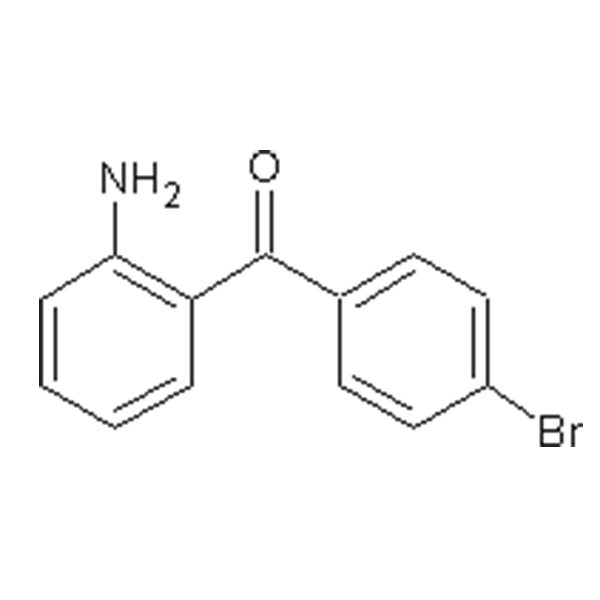
2-Amino-4'-Bromobenzophenone, with CAS No. 1140-17-6, is an aromatic compound with the molecular formula C13H10BrNO and a molecular weight of approximately 276.13 g/mol. Its structure consists of an aminophenyl group and a bromophenyl group connected through a carbonyl functionality. This combination of functional groups makes correct structural identification and impurity monitoring important when establishing material quality requirements.

Understanding the Manufacturing Challenges of Aromatic Intermediates
The manufacturing of aromatic pharmaceutical intermediates requires careful management of reaction conditions and product isolation. Depending on the selected synthetic route, reaction temperature, reagent ratios, solvent composition, reaction time, and work-up conditions may influence the final impurity profile.
During industrial production, the challenge is to reproduce the intended chemical transformation consistently while minimizing unwanted side reactions. A process that performs well in a laboratory flask may behave differently in a production reactor because of changes in heat transfer, mixing efficiency, and mass transfer.
Temperature control is particularly important in reactions involving heat release or temperature-sensitive intermediates. Industrial reactors must maintain suitable thermal conditions throughout the reaction rather than relying only on the temperature measured at one location. Differences in local temperature can affect reaction rates and potentially increase the formation of unwanted by-products.
Mixing performance also becomes more important as production volume increases. Inadequate mixing may create localized differences in reagent concentration, resulting in uneven reaction progression. Appropriate reactor design, agitation control, and feed-rate management help improve process consistency.
For a 2-Amino-4'-Bromobenzophenone intermediate supplier China, these manufacturing considerations are directly related to the ability to maintain consistent quality between development batches and commercial production batches.
Raw Material Control and Reaction Reproducibility
Raw material quality is an essential starting point for consistent intermediate manufacturing. Variations in starting material purity, moisture content, and trace impurities may influence reaction performance and downstream purification requirements.
An effective incoming material control system should define acceptance specifications, supplier qualification requirements, sampling procedures, and analytical testing methods. Materials that do not meet established requirements should be investigated before entering production.
Reaction reproducibility also depends on controlling the critical process parameters associated with the selected manufacturing route. These may include temperature profiles, addition rates, reaction time, agitation conditions, and endpoint criteria. The specific parameters should be established through process development and validated or appropriately qualified for the intended manufacturing scale.
In-process testing provides an additional control point. Rather than waiting until the final product is isolated, manufacturers can monitor reaction progression and determine whether the process has reached the required endpoint. This helps reduce unnecessary processing and provides an opportunity to investigate deviations before they affect the final batch.
Purification and Crystallization Affect Final Product Quality
After the main reaction, purification and isolation determine how effectively the desired compound is separated from reaction residues and unwanted impurities.
Depending on the manufacturing route, separation may involve extraction, washing, concentration, crystallization, filtration, and drying. Each operation can influence final product quality.
Crystallization is particularly relevant to solid pharmaceutical intermediates. Solvent selection, cooling rate, concentration, agitation, and crystallization temperature may affect crystal formation and filtration behavior. Inconsistent crystallization conditions can lead to variations in particle size distribution, bulk density, and residual solvent content.
These physical characteristics matter during subsequent manufacturing operations. For example, differences in particle size may affect material flow, sampling representativeness, dissolution behavior, or charging accuracy. Residual solvent and moisture may also influence the performance of downstream reactions.
A reliable manufacturing process should therefore establish suitable isolation and drying conditions, supported by analytical testing and documented process controls.
Analytical Methods for Confirming Product Consistency
Analytical testing is central to the release of 2-Amino-4'-Bromobenzophenone. A suitable quality control program should cover chemical identity, purity, related substances, and other relevant product-specific characteristics.
HPLC can be used to evaluate the main component and monitor related organic impurities. The method should demonstrate adequate separation and reproducibility for the intended analytical purpose. GC may be applied where suitable for the analytes being tested, including certain residual solvents.
NMR and IR provide complementary structural information. NMR can help confirm the molecular environment of hydrogen and carbon atoms, while IR can provide information about characteristic functional groups, including carbonyl and amino functionalities.
The selection of analytical methods should reflect the product's manufacturing process and quality requirements. A high purity result alone does not establish that all relevant impurities have been adequately controlled. Where necessary, additional analytical investigation should be used to identify and characterize unknown impurities.
Batch-to-batch comparison is also important. Reviewing multiple CoAs helps determine whether the supplier's production process maintains consistent quality over time. Buyers should pay attention to analytical method consistency, specification limits, and actual reported results rather than comparing purity percentages without considering the testing methodology.
Scaling from Development to Commercial Manufacturing
One of the most important differences between a laboratory supplier and an established pharmaceutical manufacturer is the ability to transfer a process into larger-scale production while maintaining quality.
Scale-up requires consideration of reactor capacity, heat-transfer efficiency, agitation, filtration equipment, drying systems, and production scheduling. A larger reactor does not simply reproduce the behavior of a smaller vessel at a proportionally larger volume.
For example, heat removal capacity does not necessarily increase at the same rate as reaction volume. Similarly, mixing characteristics can change significantly with reactor geometry and agitation design. These differences must be addressed during process development and scale-up assessment.
Jiangsu Jingye Pharmaceutical has developed technical capabilities in high-temperature and high-pressure reactions, hydrogenation, chiral synthesis, and high-vacuum distillation. These capabilities reflect an established manufacturing infrastructure for handling different types of chemical processing requirements.
The company operates a production and R&D facility covering approximately 50,000 square meters in Changzhou, China, supported by a professional technical team and modern analytical equipment. Its long-term cooperation with universities and research institutions also provides a foundation for technical development and process optimization.
GMP-Oriented Production and Quality Assurance
Manufacturing consistency requires a structured quality management system. GMP-oriented operations involve documented procedures, equipment management, personnel training, production records, material traceability, and quality control.
For intermediate manufacturing, the exact regulatory requirements depend on the intended use of the material and the customer's quality agreement. A supplier should be able to explain its quality management framework and provide relevant documentation for evaluation.
Jiangsu Jingye Pharmaceutical operates in accordance with GMP standards and holds a Drug Production License, ISO 9001, ISO 14001, and GB/T 45001 certifications. Its facilities are supported by advanced analytical instruments and a comprehensive EHS management system.
These arrangements support controlled production operations while addressing product quality, environmental management, and occupational health and safety.
Selecting a Manufacturing Partner for Long-Term Supply
When assessing a 2-Amino-4'-Bromobenzophenone intermediate supplier China, manufacturers should examine more than sample quality. Production scalability, raw material management, analytical method reliability, batch consistency, and documentation availability are equally important.
It is also useful to confirm the supplier's packaging configuration, production lead time, minimum order quantity, sample availability, and ability to maintain repeat orders. These factors determine whether a technically qualified product can also support a stable manufacturing schedule.
Jiangsu Jingye Pharmaceutical integrates pharmaceutical R&D, manufacturing, and international trade, serving customers across Europe, America, Southeast Asia, Japan, and South Korea. Its manufacturing capabilities and quality management infrastructure provide a foundation for supporting customers with pharmaceutical intermediate requirements.
Ultimately, reliable 2-Amino-4'-Bromobenzophenone production depends on the integration of process control, analytical verification, purification consistency, and manufacturing discipline. Working with a supplier that understands these requirements helps reduce material variability, improve downstream process reliability, and support long-term production planning.