
 English
 Italian
 Spanish
 Thai
 Japanese
 Portuguese
 Korean
 Russian
 French
 German
 Polish
 Arabic
 Indonesian

Selecting a reliable 2-Amino-4'-Bromobenzophenone intermediate supplier China is an important consideration for pharmaceutical companies and fine chemical manufacturers that require consistent intermediate quality, dependable production capacity, and traceable quality documentation. For pharmaceutical intermediate applications, material consistency directly influences downstream reaction performance, impurity profiles, purification requirements, and overall manufacturing costs. A supplier should therefore be evaluated not only on quoted purity and price but also on analytical capabilities, process control, production experience, and quality management systems.
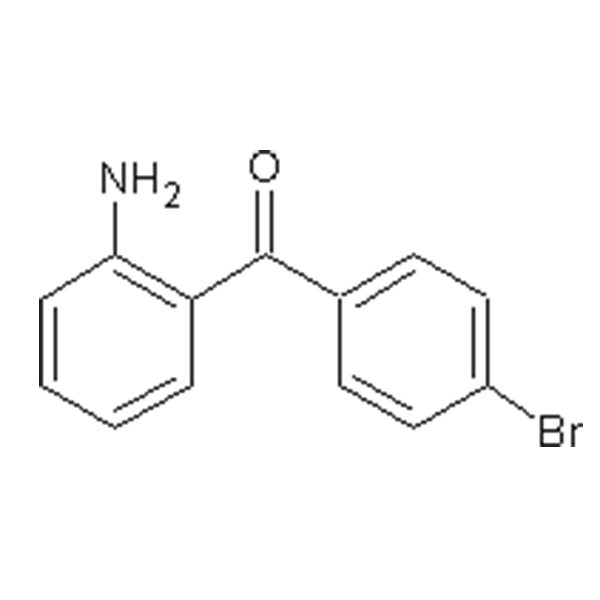
2-Amino-4'-Bromobenzophenone, also known as (2-aminophenyl)(4-bromophenyl)methanone, is an aromatic ketone compound containing both an amino functional group and a brominated phenyl structure. Its CAS number is 1140-17-6, molecular formula is C13H10BrNO, and molecular weight is approximately 276.13 g/mol. These identifiers are essential when establishing product specifications, verifying material identity, and preventing confusion with structurally related benzophenone derivatives.
PubChem+1Why Intermediate Quality Requires More Than a Purity Result
Purity is one of the first parameters considered when evaluating a pharmaceutical intermediate. However, a single percentage does not fully describe material quality. Two batches with similar assay results may have different impurity distributions, residual solvent levels, moisture contents, or physical characteristics.
For 2-Amino-4'-Bromobenzophenone, the aromatic structure and the presence of amino and bromine substituents make structural identity and impurity characterization important parts of quality evaluation. An appropriate analytical program should establish whether the supplied material meets the agreed chemical identity and purity requirements.
High-performance liquid chromatography (HPLC) or gas chromatography (GC), depending on the validated analytical method and compound behavior, may be used to assess purity and related impurities. HPLC is particularly useful for monitoring nonvolatile organic components, while GC may be appropriate for suitable volatile components and residual solvent analysis. Infrared spectroscopy (IR) and nuclear magnetic resonance (NMR) can provide additional structural confirmation.
A comprehensive Certificate of Analysis (CoA) should identify the product, batch number, analytical methods, test results, specification limits, and release status. Buyers should also clarify whether reported purity is determined by HPLC area percentage, GC area percentage, or another method. These values are not automatically interchangeable because different analytical techniques may produce different impurity profiles and response factors.
Evaluating Production Capability and Process Consistency
A qualified 2-Amino-4'-Bromobenzophenone intermediate supplier China should demonstrate the ability to maintain consistent product quality across multiple production batches. Laboratory-scale samples are useful for initial evaluation, but they do not independently demonstrate commercial manufacturing capability.
Scale-up introduces several technical variables, including reaction heat transfer, mixing efficiency, raw material consistency, reaction endpoint control, and crystallization behavior. These factors can influence conversion, impurity formation, filtration performance, and final product quality.
For example, changes in mixing conditions during scale-up may affect local concentration gradients and reaction consistency. Variations in crystallization temperature or solvent composition may influence crystal formation, filtration characteristics, and drying behavior. If these parameters are not adequately controlled, the resulting material may show batch-to-batch differences even when the nominal production process remains unchanged.
Manufacturers should therefore establish documented operating procedures, defined critical process parameters, and appropriate in-process controls. Production records should provide sufficient traceability to investigate deviations and identify potential sources of quality variation.
Jiangsu Jingye Pharmaceutical has been engaged in pharmaceutical research, manufacturing, and international trade since 1994. Following its restructuring in 2016, the company continued to develop its integrated pharmaceutical manufacturing capabilities, supported by a technical team and production facilities covering approximately 50,000 square meters in Changzhou, China.
Analytical Testing and Impurity Management
Impurity control is particularly important when an intermediate will enter a multi-step pharmaceutical synthesis process. Even relatively small quantities of an unwanted impurity may become concentrated or transformed during subsequent reactions.
A practical supplier qualification process should examine the analytical methods used for identity, assay, and related substances. HPLC methods should have appropriate specificity and resolution for the impurities relevant to the manufacturing process. Where necessary, additional techniques can be used to investigate unknown peaks or confirm structural identity.
Residual solvents and moisture should also be evaluated according to the product's manufacturing process and intended downstream use. These characteristics may influence storage stability, weighing accuracy, reaction reproducibility, and material handling.
Buyers should request representative CoAs from multiple batches rather than relying on a single sample report. Comparing batch results can reveal whether the supplier maintains consistent analytical performance and manufacturing control.
Quality Management and Regulatory Documentation
For pharmaceutical intermediate sourcing, quality management extends beyond laboratory testing. Manufacturing facilities should maintain documented procedures covering raw material acceptance, production operations, equipment cleaning, quality inspection, packaging, storage, and shipment.
Jiangsu Jingye Pharmaceutical operates in accordance with GMP standards and maintains a Drug Production License, together with ISO 9001, ISO 14001, and GB/T 45001 certifications. Its production infrastructure includes advanced analytical instruments and an established environmental, health, and safety management system.
These systems provide a framework for managing production consistency, occupational safety, environmental responsibilities, and product traceability. However, buyers should verify the specific manufacturing site's approved scope and applicable documentation rather than assuming that every certification automatically covers every product or regulatory application.
Packaging, Storage, and Batch Traceability
Packaging is another important part of intermediate quality management. 2-Amino-4'-Bromobenzophenone is supplied as a solid material, and the packaging configuration should protect it from contamination, moisture exposure, and damage during transportation.
Jingye's product information specifies 25 kg fiber drums with double polyethylene inner bags and palletized export packaging. This configuration supports bulk handling and provides multiple packaging barriers during storage and transportation.
JingyeBefore shipment, buyers should confirm packaging material compatibility, sealing integrity, net weight, batch identification, labeling requirements, and the availability of the corresponding CoA and Safety Data Sheet (SDS). Storage conditions should follow the approved product specification and SDS rather than relying on generalized assumptions.
Why Work with Jiangsu Jingye Pharmaceutical?
As an integrated pharmaceutical enterprise, Jiangsu Jingye Pharmaceutical combines R&D, manufacturing, and international trade. Its technical capabilities include high-temperature and high-pressure reactions, hydrogenation, chiral synthesis, and high-vacuum distillation.
The company also maintains long-term cooperation with universities and research institutions, supporting technical development and process improvement. Its products are exported to Europe, America, Southeast Asia, Japan, and South Korea, providing experience in serving international chemical and pharmaceutical markets.
When evaluating a 2-Amino-4'-Bromobenzophenone intermediate supplier China, the most important factors are consistent batch quality, reliable analytical documentation, controlled manufacturing processes, and dependable delivery. Jiangsu Jingye Pharmaceutical combines pharmaceutical manufacturing experience with established quality and production infrastructure to support customers seeking a long-term intermediate supply partner.