
 English
  Italian
  Spanish
  Thai
Thai  Japanese
  Portuguese
  Korean
  Russian
  French
  German
  Polish
  Arabic
  Indonesian
For pharmaceutical intermediate sourcing, the difference between a laboratory supplier and a production-capable manufacturer becomes increasingly important as demand increases. A 2-Amino-4'-Bromobenzophenone intermediate supplier China must be able to maintain chemical consistency while moving from development samples to repeat commercial batches.
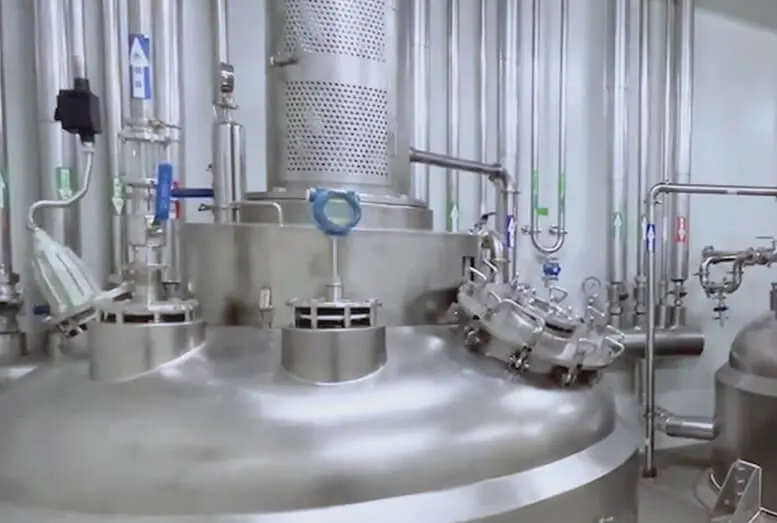
The intermediate may serve as a key building block in downstream synthesis, meaning that its purity and impurity profile can influence subsequent reaction yield, purification load, and final product quality. This makes process control, analytical testing, GMP manufacturing, and production scalability central considerations when evaluating suppliers.
From Chemical Identity to Process Performance
The first requirement is confirmation that the material is chemically what the specification says it is.
For 2-Amino-4'-Bromobenzophenone, identity testing should be supported by appropriate analytical evidence. Depending on the customer's quality requirements, techniques such as HPLC, GC, NMR, mass spectrometry, and other analytical methods may be used to establish identity and purity.
However, identity alone does not guarantee process suitability.
Two batches can contain the same target compound while having different impurity profiles. One batch may contain a trace impurity that has little impact on the downstream reaction, while another may contain an impurity capable of reacting under subsequent conditions.
This is why chromatographic purity and impurity control should be evaluated alongside chemical identity.
Impurity Profile Can Affect Downstream Yield
In multi-step synthesis, every additional impurity introduced at an early stage creates a potential burden for later purification.
Suppose an intermediate enters a three-step synthesis and contains a low-level impurity that is not removed in the next reaction. That impurity may be carried forward, transformed into another compound, or accumulate in a later purification stream.
The cost is not limited to material loss. Additional solvent consumption, longer purification cycles, lower overall yield, and increased analytical workload may result.
A supplier capable of controlling impurity formation at the manufacturing stage can therefore provide value beyond the nominal assay percentage.
Process Control Is Essential During Scale-Up
The chemistry of an intermediate can change significantly when production moves from laboratory vessels to industrial reactors.
Mixing time, heat-transfer rate, agitation, reagent addition rate, and temperature uniformity can all change with scale. These differences can influence reaction kinetics and impurity formation.
High-temperature or high-pressure reactions require particularly careful process control because temperature and pressure can affect both reaction rate and selectivity.
Jiangsu Jingye Pharmaceutical has technical capabilities in high-temperature and high-pressure reactions, hydrogenation, chiral synthesis, and high-vacuum distillation. Such capabilities provide a technical foundation for developing and manufacturing intermediates that require controlled reaction and separation conditions.
Purification Strategy Should Match the Chemistry
Purification is often where the final quality of a pharmaceutical intermediate is established.
Depending on the physical and chemical characteristics of the product, purification may involve extraction, crystallization, filtration, drying, distillation, or combinations of these operations.
For a solid aromatic intermediate, crystallization can be particularly important because solvent selection, cooling rate, concentration, and seeding conditions may influence both purity and product recovery.
An industrial supplier should understand not only how to obtain high assay material but also how to reproduce the same purification behavior from batch to batch.
This is important when customers require stable physical properties for weighing, dissolution, charging, or downstream processing.
Moisture and Residual Solvents Require Control
Residual solvents and moisture are often overlooked when comparing intermediate suppliers.
Even when the organic assay meets specification, excessive residual solvent can affect material handling, storage stability, reaction concentration, and downstream process control. Water content can similarly influence reactions that are sensitive to moisture.
Appropriate drying conditions and analytical testing should therefore be incorporated into the product quality strategy.
High-vacuum distillation and controlled drying technologies can be useful tools when the chemistry requires effective removal of volatile components without excessive thermal exposure.
GMP Provides Process Discipline
A GMP-oriented manufacturing environment establishes controls around production, equipment, personnel, documentation, cleaning, materials, and quality management.
Jiangsu Jingye Pharmaceutical operates according to GMP standards and maintains a complete EHS system. The company also holds a Drug Production License, ISO 9001, ISO 14001, and GB/T 45001 certifications.
For international customers, these systems can support supplier qualification and ongoing quality management. They also provide a structured framework for handling deviations, changes, investigations, and batch documentation.
The objective is not merely to produce one compliant batch but to create a repeatable manufacturing process.
Analytical Testing Supports Release Decisions
A robust quality-control system should connect analytical results directly with defined release specifications.
For 2-Amino-4'-Bromobenzophenone, the final specification may include appearance, assay, related substances, moisture, residual solvents, and other parameters relevant to the customer's application.
The analytical method should have sufficient specificity to distinguish the target compound from relevant impurities. Testing frequency and acceptance criteria should be established according to the product's risk profile and quality requirements.
Batch-specific Certificates of Analysis should then provide traceability between the manufactured material and the reported analytical results.
Production Capacity Matters for Long-Term Supply
A supplier may successfully produce a laboratory sample but still lack the infrastructure required for regular commercial supply.
Production capacity involves more than reactor volume. Raw-material availability, equipment scheduling, analytical throughput, purification capacity, drying, packaging, storage, and quality-release procedures all influence the actual supply capability.
Jiangsu Jingye Pharmaceutical operates a 50,000-square-meter facility in Changzhou and integrates R&D, production, and international trade. Its technical and manufacturing infrastructure is designed to support pharmaceutical production rather than isolated laboratory-scale development.
For customers planning increasing demand, evaluating scale-up capability at the beginning can reduce the risk of changing suppliers later.
International Supply Requires Documentation and Logistics Control
A China-based intermediate supplier serving international pharmaceutical customers needs to manage more than manufacturing.
Export documentation, batch traceability, packaging integrity, product labeling, storage conditions, and transportation requirements must be coordinated with the customer's expectations.
Jiangsu Jingye Pharmaceutical exports products to Europe, America, Southeast Asia, Japan, and South Korea, providing experience in serving different international markets.
For recurring orders, consistent documentation and communication can be as important as the physical delivery itself because customers may need to integrate supplier records into their internal quality systems.
R&D Support Can Reduce Development Risk
An intermediate supplier with technical development capabilities can contribute more effectively when customers encounter process challenges.
For example, if a downstream reaction produces an unexpected impurity pattern, understanding the upstream intermediate's impurity profile can help determine whether the issue originates from the starting material or the customer's own reaction.
Jiangsu Jingye Pharmaceutical maintains a professional technical team and long-term cooperation with universities and research institutions. This R&D-oriented structure can support process optimization and technical communication throughout the product lifecycle.
Conclusion
A reliable 2-Amino-4'-Bromobenzophenone intermediate supplier China should demonstrate control across the entire supply chain, from raw materials and reaction conditions to purification, analytical release, packaging, and international delivery.
GMP-oriented manufacturing, appropriate analytical methods, scalable production, controlled impurity profiles, and traceable documentation provide a stronger foundation for long-term pharmaceutical intermediate supply than a single high-purity sample.
For customers requiring stable sourcing, Jiangsu Jingye Pharmaceutical's integrated R&D and manufacturing capabilities, specialized reaction technologies, analytical infrastructure, and international export experience provide a practical basis for supporting development and commercial supply requirements.