
 English
  Italian
  Spanish
  Thai
Thai  Japanese
  Portuguese
  Korean
  Russian
  French
  German
  Polish
  Arabic
  Indonesian
Developing a pharmaceutical route around a new intermediate is very different from purchasing a commodity chemical. A 2-Amino-4'-Bromobenzophenone intermediate supplier China needs to support a progression that may begin with laboratory samples, continue through process development and pilot production, and ultimately reach repeat commercial batches.
At each stage, the technical requirements change. Early development focuses on chemical identity and reaction performance, while scale-up introduces additional requirements for impurity control, process robustness, production capacity, analytical consistency, packaging, and regulatory documentation.

A supplier capable of supporting this entire progression can reduce the technical and commercial risks associated with changing material sources after a process has already been established.
R&D Samples Need More Than a Purity Number
During early pharmaceutical development, a small quantity of intermediate may be sufficient for reaction screening. However, the sample should still be supported by reliable analytical information.
Assay alone does not provide a complete picture of chemical quality. The customer's development team may need to understand related substances, residual solvents, moisture, physical form, and other characteristics that could affect the downstream reaction.
A high-quality development sample therefore serves two purposes: it provides material for experimentation and establishes an analytical reference for future batches.
When the same specification and analytical approach are maintained as production increases, the transition from development to manufacturing becomes easier to manage.
Process Development Must Consider Manufacturing Reality
A laboratory chemist can often optimize a reaction using small quantities, precise temperature control, and rapid mixing. Industrial production introduces different physical conditions.
For example, reagent addition that takes seconds at laboratory scale may take several minutes or longer in a large reactor. Heat generated by an exothermic reaction must also be removed through a much larger thermal system.
These differences can influence selectivity and impurity formation.
Jiangsu Jingye Pharmaceutical's experience with high-temperature and high-pressure reactions, hydrogenation, chiral synthesis, and high-vacuum distillation provides a technical basis for addressing different process conditions during development and production.
The objective of scale-up should be to preserve the critical quality attributes of the intermediate while adapting the process to industrial equipment.
Impurity Control Should Begin With Process Understanding
Impurity control is most effective when the source of the impurity is understood.
Potential sources may include raw-material impurities, incomplete reaction, side reactions, overreaction, degradation, solvent-related effects, or purification limitations.
For an aromatic ketone intermediate, closely related chemical structures may be difficult to remove if their physical properties are similar to those of the target compound. This makes process selectivity and purification strategy important.
Rather than relying exclusively on final-stage purification, a robust manufacturing process should minimize the formation of critical impurities wherever practical.
This can improve yield while reducing the purification burden and making batch performance more predictable.
Crystallization Can Influence Both Purity and Physical Properties
If the intermediate is isolated as a solid, crystallization can become a critical process step.
Parameters such as solvent system, concentration, cooling profile, agitation, seeding, and filtration can influence crystal formation. The resulting physical properties may affect filtration efficiency, drying time, particle characteristics, and final recovery.
A supplier should therefore control crystallization conditions when they are relevant to product quality.
This is particularly important for customers who charge the intermediate directly into subsequent reactions, because differences in particle behavior can influence weighing, dissolution, and charging efficiency.
Scale-Up Requires Equipment Capability
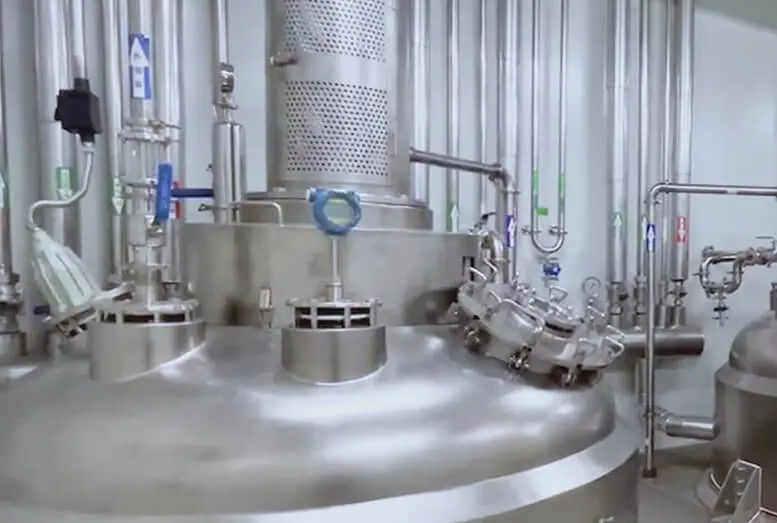
Not every pharmaceutical intermediate requires specialized high-temperature, high-pressure, or vacuum equipment. However, having access to such capabilities can expand the range of processes a supplier can support.
Jiangsu Jingye Pharmaceutical maintains production capabilities covering high-temperature and high-pressure reactions, hydrogenation, chiral synthesis, and high-vacuum distillation.
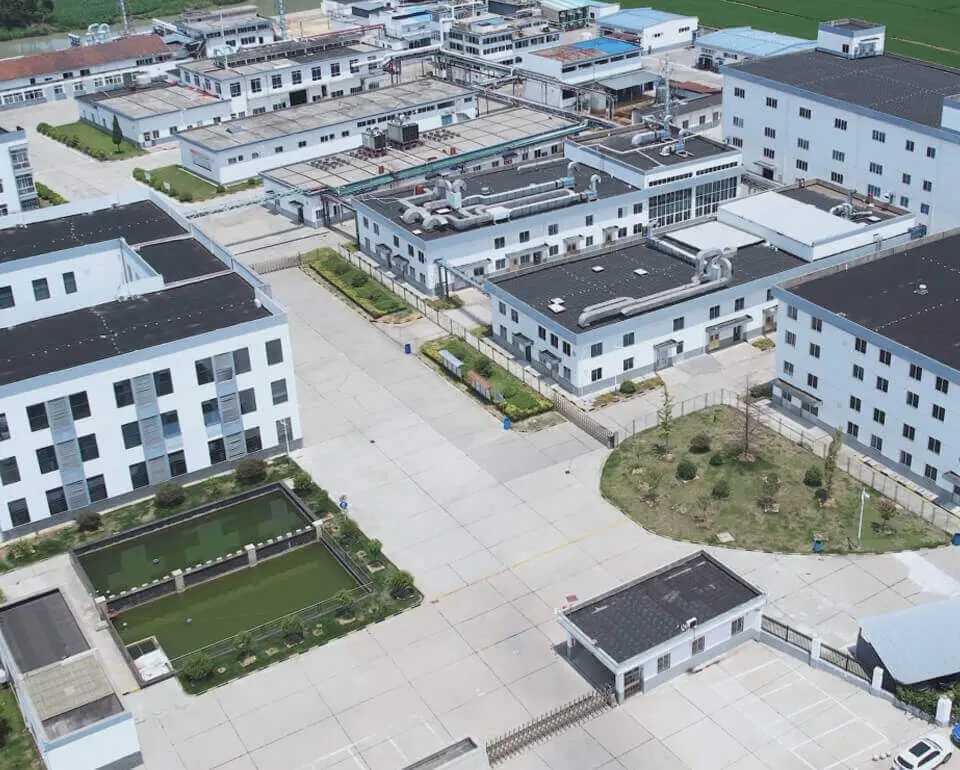
The company operates a 50,000-square-meter pharmaceutical manufacturing facility in Changzhou and combines R&D, production, and international trade.
This integrated structure can help reduce the gap between process development and production implementation, particularly when the manufacturing route requires controlled reaction or separation conditions.
Quality Systems Support Reproducibility
When a customer moves from one development batch to multiple commercial batches, reproducibility becomes the central quality requirement.
A GMP-oriented production system provides structured controls for materials, equipment, procedures, documentation, personnel, cleaning, deviations, and batch release.
Jiangsu Jingye Pharmaceutical operates under GMP standards and holds ISO 9001, ISO 14001, and GB/T 45001 certifications in addition to a Drug Production License.
For international customers, these systems can provide a stronger framework for supplier qualification, change management, batch traceability, and ongoing quality monitoring.
Analytical Data Should Follow the Material
The analytical specification should remain connected to the actual material supplied.
Each commercial batch should have identifiable analytical results linked to its batch number. Depending on the customer's requirements, the Certificate of Analysis may cover appearance, identification, assay, related substances, moisture, residual solvents, and other relevant quality attributes.
For development-stage customers, retaining analytical comparability between early samples and commercial batches is particularly useful. It allows changes in downstream reaction performance to be investigated using objective material-quality data.
This becomes even more important when a process has been optimized around a specific intermediate quality profile.
Supplier Qualification Should Include Technical Communication
Supplier qualification is not limited to reviewing certificates.
The technical communication process can reveal whether the manufacturer understands the product and its manufacturing risks. Questions about impurity control, analytical methods, batch consistency, production scale, storage, packaging, and change management should receive clear and technically supported responses.
For long-term pharmaceutical supply, communication is particularly important when specifications, demand forecasts, packaging formats, or regulatory requirements change.
A supplier capable of maintaining consistent technical communication can help reduce uncertainty throughout the product lifecycle.
Global Supply Requires a Stable Quality Chain
International pharmaceutical customers need confidence that product quality will remain consistent during transportation and subsequent storage.
Packaging should protect the intermediate against environmental exposure, while labels and batch documentation should remain legible and traceable.
Jiangsu Jingye Pharmaceutical exports products to Europe, America, Southeast Asia, Japan, and South Korea. This international market experience supports the coordination required between manufacturing, quality documentation, logistics, and customer requirements.
For recurring supply, predictable lead times and consistent documentation can become important components of overall procurement reliability.
Building a Long-Term Intermediate Supply Strategy
A strong sourcing strategy should consider both current demand and future development.
A customer may initially require only laboratory quantities of 2-Amino-4'-Bromobenzophenone, but successful development can result in pilot-scale and commercial requirements. Selecting a supplier with scalable manufacturing capabilities from the beginning can reduce the risk of repeating technical qualification later.
The ideal supplier should therefore demonstrate R&D competence, manufacturing infrastructure, analytical capability, GMP-oriented quality management, and experience with international customers.
Conclusion
The role of a 2-Amino-4'-Bromobenzophenone intermediate supplier China extends beyond delivering a chemical product. A reliable supplier should be capable of supporting the complete journey from development sample to scalable pharmaceutical manufacturing.
Jiangsu Jingye Pharmaceutical combines R&D, production, analytical capabilities, specialized reaction technologies, GMP-oriented operations, and international trade within one integrated organization. Its technical capabilities in high-temperature and high-pressure reactions, hydrogenation, chiral synthesis, and high-vacuum distillation provide additional flexibility for complex pharmaceutical manufacturing requirements.
For customers planning long-term supply, the most valuable supplier is one that can maintain the same focus on chemical consistency, impurity control, analytical traceability, production scalability, and documentation as the project moves from laboratory research to commercial manufacturing.