

 English
  Italian
  Spanish
  Thai
Thai  Japanese
  Portuguese
  Korean
  Russian
  French
  German
  Polish
  Arabic
  Indonesian
Selecting a bulk pharmaceutical intermediates supplier is not simply a matter of comparing product price and nominal purity. For pharmaceutical manufacturing, an intermediate becomes part of a controlled process chain in which raw-material consistency, impurity profiles, batch traceability, manufacturing capability, analytical verification, and regulatory documentation can directly influence downstream yield and quality.
This becomes more important when an intermediate is used at kilogram-to-ton scale. A material that performs acceptably during laboratory development may create significant problems during commercial production if its impurity profile changes between batches, if residual solvents fluctuate, or if the supplier cannot maintain consistent reaction and purification conditions.
For international pharmaceutical companies, the most reliable sourcing strategy is therefore to evaluate the supplier's manufacturing system together with the individual intermediate.
Manufacturing Capability Should Match the Chemistry
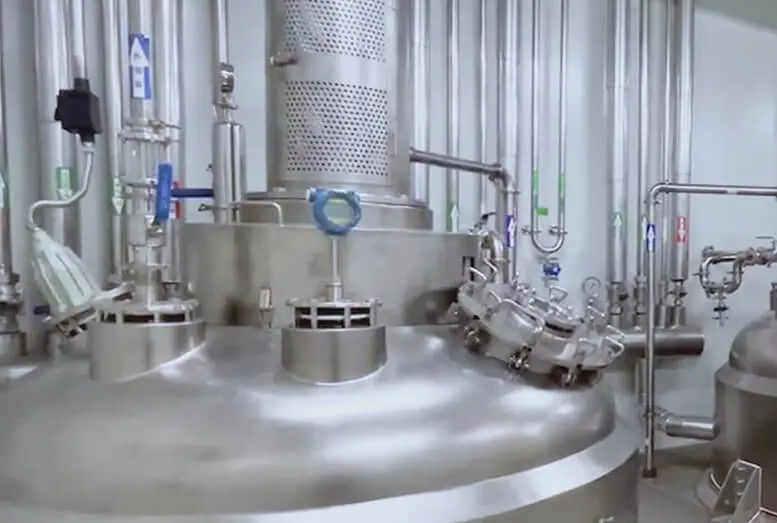
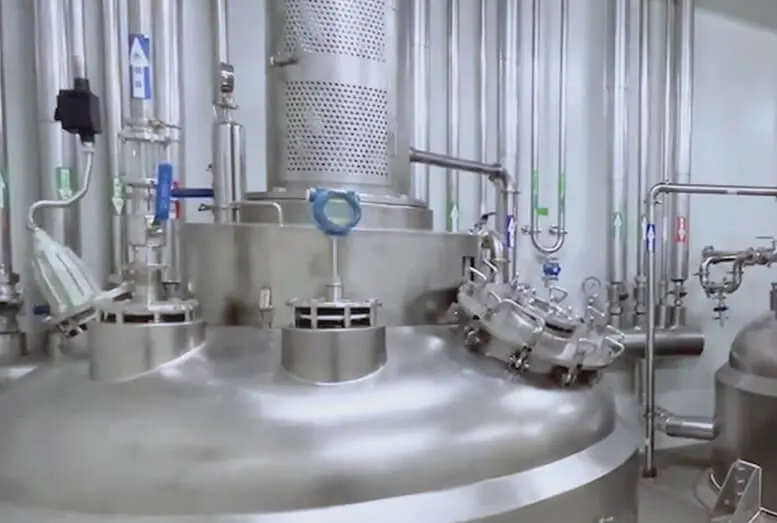
Different pharmaceutical intermediates require different reaction and purification technologies. A supplier with only conventional reaction equipment may not be suitable for products requiring hydrogenation, high-temperature reactions, high-pressure reactions, chiral synthesis, or high-vacuum distillation.
Jiangsu Jingye Pharmaceutical has developed capabilities in high-temperature and high-pressure reactions, hydrogenation, chiral synthesis, and high-vacuum distillation. These technologies are particularly relevant when an intermediate requires controlled reaction conditions or separation of closely related impurities.
For example, hydrogenation reactions may require controlled hydrogen pressure, temperature, catalyst loading, and reaction time. A high-vacuum distillation process may depend on pressure stability, temperature control, residence time, and the thermal properties of the target compound.
The important question is therefore whether the supplier's process platform matches the chemistry of the intermediate rather than whether it simply has a large production facility.
Batch Consistency Matters at Commercial Scale
A pharmaceutical intermediate may pass a specification such as ≥99.0% purity while still showing meaningful differences between production batches.
Two batches with the same assay result can have different levels of individual impurities, residual solvents, water content, color, or trace inorganic residues.
These differences may influence downstream reactions, crystallization behavior, filtration performance, or final API quality.
A capable bulk pharmaceutical intermediates supplier should therefore establish controlled manufacturing parameters and analytical release criteria that go beyond a single purity value.
For commercial sourcing, historical batch data can provide useful evidence of process capability. Consistent results across multiple batches are generally more meaningful than one successful qualification batch.
Impurity Control Requires Process Understanding
Impurity control begins during synthesis rather than at final inspection.
Reaction temperature, pressure, reagent ratio, catalyst selection, reaction time, mixing efficiency, and quench conditions can influence the formation of process-related impurities.
Purification then determines how effectively those impurities are removed.
This is especially important for intermediates that will undergo several additional synthetic steps. An impurity that appears at a low level in an early-stage intermediate may accumulate or become difficult to remove during downstream processing.
For this reason, a supplier should understand not only the final specification but also the impurity pathways associated with the manufacturing route.
Analytical Capability Supports Release Decisions
Reliable analytical testing is essential for bulk pharmaceutical intermediates.
Depending on the material and customer requirements, analytical programs may include HPLC, GC, Karl Fischer water determination, melting point, residual-solvent testing, NMR, mass spectrometry, or other appropriate techniques.
HPLC can provide quantitative information about assay and related substances, while GC is particularly useful for volatile components and residual solvents.
The value of analytical equipment depends on method suitability, calibration, validation or verification where applicable, system suitability, reference standards, and controlled laboratory procedures.
Jiangsu Jingye Pharmaceutical operates modern analytical facilities and maintains a technical team supporting research, manufacturing, and quality control.
GMP Is a Manufacturing System, Not a Certificate on a Website
For pharmaceutical intermediates used in regulated supply chains, GMP compliance should be evaluated through the actual manufacturing and quality systems.
Important elements include controlled production procedures, equipment qualification and maintenance, cleaning procedures, batch records, deviation management, change control, training, material traceability, and documented quality release.
Jiangsu Jingye Pharmaceutical states that its production operates according to GMP standards and that it maintains a complete EHS system.
For customers performing supplier qualification, the practical objective is to determine whether these systems consistently control the risks associated with the specific intermediate.
Traceability Becomes Critical in Bulk Supply
When purchasing bulk intermediates, traceability should extend from incoming raw materials through manufacturing and final packaging.
A suitable system should allow the supplier to identify the relevant raw-material batches, production records, analytical results, processing stages, and finished-product batch information.
This becomes particularly important when a deviation or unexpected analytical result occurs.
If a supplier can quickly trace the affected batch and identify related production records, investigation and risk assessment can proceed more efficiently.
Production Scale Should Be Evaluated Carefully
A large production site does not automatically mean that every intermediate can be manufactured efficiently at commercial scale.
The production route must be compatible with reactor volume, heat-transfer capacity, agitation, pressure rating, vacuum capability, filtration capacity, drying equipment, and packaging requirements.
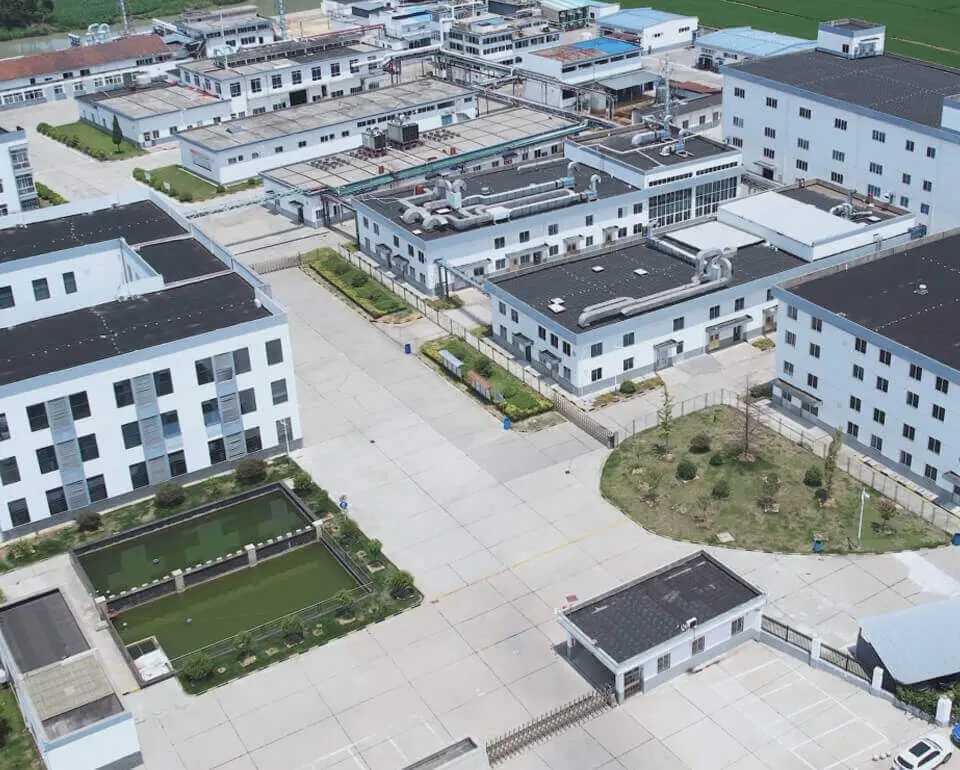
Jiangsu Jingye Pharmaceutical operates a production site covering approximately 50,000 square meters in Changzhou, providing an industrial platform for R&D, manufacturing, and international trade.
The more important consideration is whether the available equipment can reproduce laboratory or pilot-scale chemistry at commercial volume without introducing unacceptable changes in heat transfer, mixing, reaction kinetics, or purification efficiency.
Scale-Up Is a Technical Risk
Moving from a laboratory reactor to a production reactor changes the physical environment of the reaction.
A 10 L laboratory reaction and a multi-cubic-meter production reaction may use the same chemical formula but behave differently because heat-transfer area, mixing time, gas-liquid contact, and mass-transfer characteristics change with scale.
Hydrogenation is a good example. Hydrogen availability at the catalyst surface can depend on pressure, agitation, gas dispersion, and liquid properties.
A supplier with genuine scale-up experience can identify these variables before commercial production rather than discovering them after a failed batch.
EHS Capability Matters for Chemical Intermediates
Pharmaceutical intermediates may involve flammable solvents, corrosive reagents, toxic compounds, pressurized gases, or exothermic reactions.
A supplier therefore needs an EHS system capable of managing chemical storage, process hazards, waste treatment, emergency response, and worker protection.
Jiangsu Jingye Pharmaceutical maintains ISO 14001 and GB/T 45001 certifications in addition to ISO 9001, reflecting its broader quality, environmental, and occupational-health management framework.
For international customers, these systems can reduce supply-chain risk and support more structured supplier qualification.
International Supply Requires Documentation Discipline
A bulk pharmaceutical intermediates supplier serving Europe, North America, Southeast Asia, Japan, and South Korea must manage more than manufacturing.
Export documentation, certificates of analysis, batch information, specifications, packaging requirements, shipping conditions, and customer-specific quality agreements may all form part of the supply process.
Jiangsu Jingye Pharmaceutical has experience exporting products to these markets, providing an established basis for international commercial supply.
The ability to communicate technical information accurately across the entire order cycle is particularly important when specifications or documentation requirements differ between customers.
Conclusion
The right bulk pharmaceutical intermediates supplier should be evaluated through manufacturing technology, analytical capability, GMP systems, batch consistency, traceability, scale-up experience, EHS management, and international supply capability.
Jiangsu Jingye Pharmaceutical combines pharmaceutical R&D, production, and international trade with capabilities in high-temperature and high-pressure reactions, hydrogenation, chiral synthesis, and high-vacuum distillation.
For companies sourcing intermediates at commercial scale, the strongest supplier relationship is one based on reproducible chemistry, documented quality systems, controlled impurity profiles, and reliable batch-to-batch performance rather than price alone.
![Choosing a 2-Bromo-1-[4-(methylsulfonyl)phenyl]-1-ethanone Pharmaceutical Intermediate Supplier China](/uploads/upload/20261015/261015160435145.webp)