

 English
  Italian
  Spanish
  Thai
Thai  Japanese
  Portuguese
  Korean
  Russian
  French
  German
  Polish
  Arabic
  Indonesian
For pharmaceutical intermediates, quality is established long before a finished batch reaches the warehouse. The final analytical result reflects a chain of decisions involving raw-material qualification, process development, reaction control, purification, equipment management, laboratory testing, documentation, and batch release.
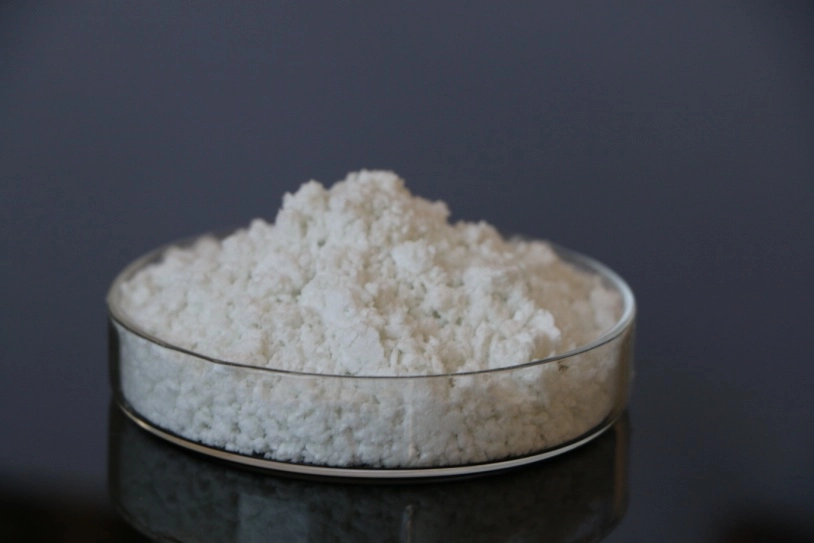
This makes quality-system maturity a critical consideration when evaluating a GMP pharmaceutical intermediates manufacturer China. A supplier may have advanced reactors and large production capacity, but consistent pharmaceutical supply requires these physical resources to operate within a controlled quality framework.
Jiangsu Jingye Pharmaceutical is an integrated pharmaceutical enterprise covering R&D, production, and international trade. Founded in 1994 and restructured in 2016, the company operates in Changzhou across a 50,000-square-meter site and serves customers in Europe, America, Southeast Asia, Japan, and South Korea.
Raw-Material Control Is the First Quality Gate
The quality of a pharmaceutical intermediate begins with its raw materials.
Variations in purity, moisture, residual solvents, impurity profiles, or physical properties can affect reaction behavior.
For example, a change in raw-material purity can alter the effective molar ratio between reactants. A difference in water content may also affect moisture-sensitive reactions.
Supplier qualification and incoming material testing therefore provide an important first control point.
Material identification and batch traceability should remain connected to the production record so that the origin of each major input can be reconstructed when required.
Process Parameters Must Be Controlled Within Defined Ranges
A production process usually has multiple parameters that influence critical quality attributes.
These can include reaction temperature, pressure, pH, agitation, addition rate, reaction time, solvent ratio, catalyst loading, and endpoint criteria.
The objective is not to keep every parameter at an artificially fixed number under all circumstances.
Instead, the process should establish scientifically justified operating ranges within which the desired quality can be consistently achieved.
This approach provides greater manufacturing robustness while maintaining appropriate process control.
Analytical Testing Connects Chemistry With Quality
A pharmaceutical intermediate needs analytical evidence demonstrating that it meets its defined specifications.
Depending on the product, testing may address identity, assay, related substances, residual solvents, moisture, and other relevant quality attributes.
Different analytical techniques can provide different types of information.
Chromatographic methods can help distinguish the target compound from related substances, while other analytical approaches can provide information about identity or physical properties.
The analytical strategy should therefore be developed around the actual molecular structure and product specification.
Impurity Profiles Matter Beyond Assay
A high assay value does not automatically mean that an intermediate is suitable for downstream pharmaceutical manufacturing.
Two batches could have similar assay values while exhibiting different impurity profiles.
This matters because certain impurities may carry through subsequent synthesis steps or interfere with purification of the final active pharmaceutical ingredient.
Process development should therefore consider both conversion and impurity formation.
A controlled manufacturing process seeks to minimize unwanted impurities at the point of formation rather than relying entirely on downstream purification.
Hydrogenation Requires Specific Quality Controls
Hydrogenation processes can introduce specific quality-control considerations involving catalyst residues, reaction completeness, selectivity, and potential over-reaction.
The endpoint should be established using appropriate analytical evidence rather than simply relying on reaction time.
Changes in catalyst condition, hydrogen pressure, temperature, or mixing can affect conversion and selectivity.
A manufacturer with dedicated hydrogenation experience can therefore provide important process knowledge for intermediates produced through catalytic reduction.
Jiangsu Jingye Pharmaceutical lists hydrogenation among its core technical capabilities.
Chiral Intermediates Require Stereochemical Analysis
For chiral pharmaceutical intermediates, chemical purity and stereochemical purity are separate considerations.
A batch may contain a high percentage of the desired chemical compound while still requiring control of an undesired stereoisomer.
The analytical method must therefore be capable of distinguishing the relevant stereochemical forms when required by the specification.
Chiral synthesis capability combined with appropriate analytical control can help maintain stereochemical consistency between batches.
High-Vacuum Distillation Supports Controlled Purification
Purification is often one of the most technically demanding stages of intermediate manufacturing.
High-vacuum distillation can be useful for suitable compounds where separation by volatility is practical and thermal exposure needs to be controlled.
Operating under reduced pressure can lower boiling temperatures, potentially allowing separation at less severe thermal conditions.
The process nevertheless requires careful control of vacuum level, temperature, feed composition, condenser performance, and collection conditions.
A small change in distillation conditions can affect purity and recovery, making process control important for commercial production.
GMP Requires Controlled Documentation
GMP manufacturing is inseparable from documentation.
Production records should provide evidence that the approved process was followed and that critical materials and operations were appropriately controlled.
Documentation may cover raw-material batches, equipment status, process parameters, in-process testing, deviations, corrective actions, analytical results, and final release.
This information creates the manufacturing history of each batch.
For international customers, well-controlled documentation also simplifies technical communication and supplier qualification.
Deviation Management Protects Long-Term Consistency
No complex manufacturing operation is completely immune to deviations.
The critical issue is how deviations are identified, investigated, assessed, and resolved.
For example, an unexpected temperature excursion should not be treated simply as an isolated event. Its potential impact on reaction conversion and impurity formation should be scientifically evaluated.
The investigation may require review of process data, analytical results, equipment status, operator records, and historical batch trends.
Effective deviation management can prevent the same issue from recurring.
Change Control Protects the Validated Process
Pharmaceutical manufacturing processes evolve over time.
Raw-material suppliers may change, equipment may be upgraded, analytical methods may be improved, or production parameters may require optimization.
However, uncontrolled changes can introduce new risks.
A formal change-control process allows the potential impact of a change to be evaluated before implementation.
Depending on the change, additional testing, validation, stability assessment, customer notification, or regulatory evaluation may be required.
This is particularly important when an intermediate is incorporated into a customer's qualified pharmaceutical manufacturing process.
EHS Is Part of Manufacturing Reliability
Pharmaceutical intermediate production may involve hazardous chemicals and challenging operating conditions.
A complete EHS system helps control risks related to chemical handling, high temperature, high pressure, hydrogenation, solvent use, waste management, equipment operation, and worker exposure.
Jiangsu Jingye Pharmaceutical maintains a complete EHS system and holds ISO14001 and GB/T 45001 certifications.
Environmental and occupational safety management complement GMP requirements by helping ensure that manufacturing operations remain controlled from both product-quality and operational-risk perspectives.
International Export Requires Supply-Chain Discipline
Pharmaceutical intermediates supplied internationally must move through multiple logistics and documentation stages.
Packaging, labeling, storage conditions, transportation requirements, export documentation, and batch identification must remain consistent with the product's characteristics and customer requirements.
A supplier with established export experience can reduce communication and logistics complexity.
Jiangsu Jingye Pharmaceutical exports products to Europe, America, Southeast Asia, Japan, and South Korea, giving its manufacturing operation experience with international pharmaceutical supply chains.
Certifications Provide a Framework, Not the Entire Answer
Certifications are important indicators of management-system maturity, but they should not be evaluated in isolation.
A comprehensive supplier assessment should also examine production capabilities, analytical resources, process-development experience, equipment suitability, traceability, deviation management, change control, and customer communication.
Jiangsu Jingye Pharmaceutical operates under GMP requirements and holds a Drug Production License, ISO9001, ISO14001, and GB/T 45001 certifications.
Together with its pharmaceutical R&D and production capabilities, these systems provide a structured foundation for controlled intermediate manufacturing.
Why Integrated R&D and Production Matter
An integrated organization can connect laboratory process knowledge with commercial manufacturing requirements.
When a reaction needs optimization, the impact on equipment, purification, analytical testing, production scheduling, and EHS can be considered together.
This can be particularly useful for pharmaceutical intermediates involving high-temperature and high-pressure reactions, hydrogenation, chiral synthesis, or high-vacuum distillation.
The goal is to create a process that is not only chemically feasible but also reproducible, scalable, safe, and economically practical.
Conclusion
For international pharmaceutical companies, choosing a GMP pharmaceutical intermediates manufacturer China requires a comprehensive evaluation of quality systems and technical manufacturing capabilities.
Raw-material control, reaction parameters, impurity management, analytical testing, equipment control, documentation, deviation investigation, change control, EHS management, and international logistics all contribute to reliable supply.
Jiangsu Jingye Pharmaceutical combines pharmaceutical R&D, manufacturing, specialized chemical process capabilities, GMP-based operations, analytical resources, EHS management, and international export experience within an integrated organization.
For customers seeking a long-term pharmaceutical intermediate manufacturing partner, this combination provides a practical foundation for moving from process development to consistent commercial production while maintaining control over quality, traceability, and supply-chain requirements.

![Quality Control for 2-Bromo-1-[4-(methylsulfonyl)phenyl]-1-ethanone Pharmaceutical Intermediate Supplier China](/uploads/upload/20261015/261015160435145.webp)