
 English
  Italian
  Spanish
  Thai
Thai  Japanese
  Portuguese
  Korean
  Russian
  French
  German
  Polish
  Arabic
  Indonesian
For pharmaceutical companies developing or commercializing new chemical entities, selecting a GMP pharmaceutical intermediates manufacturer China often becomes most challenging when the synthesis involves multiple reaction steps, specialized equipment, difficult purification, or strict impurity control.
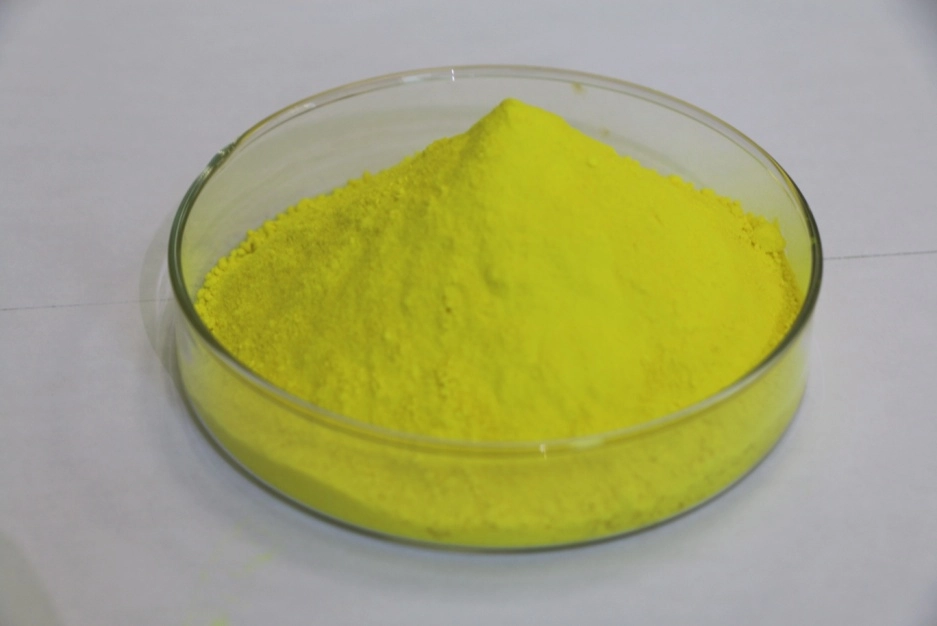
Laboratory-scale chemistry does not automatically translate into stable commercial production. Heat transfer changes with vessel size, mixing behavior becomes more complex, addition rates change relative to batch volume, and purification performance can shift when process parameters are scaled.
A capable manufacturing partner must therefore understand both chemistry and industrial production. Jiangsu Jingye Pharmaceutical combines pharmaceutical R&D and manufacturing capabilities with specialized expertise in high-temperature and high-pressure reactions, hydrogenation, chiral synthesis, and high-vacuum distillation.
Why Laboratory Success Does Not Guarantee Production Success
At laboratory scale, a reaction may use a relatively small vessel with rapid heat transfer and highly efficient mixing.
Production reactors operate under different physical conditions.
As batch volume increases, the surface-area-to-volume ratio changes. Heat generated by an exothermic reaction may therefore be removed differently, while reagent addition can take considerably longer.
Mixing time can also increase.
These differences can influence reaction temperature, local concentration, conversion, and impurity generation.
Scale-up should therefore involve process understanding rather than simply multiplying laboratory quantities.
Reaction Engineering Determines Scale-Up Stability
A pharmaceutical intermediate process can involve several critical reaction variables.
Temperature may affect both reaction rate and selectivity. Pressure can influence gas-liquid reactions. Agitation determines mixing efficiency, while reagent addition rate can influence local concentrations.
For exothermic reactions, the relationship between heat generation and heat removal becomes particularly important.
If heat removal cannot keep pace with the reaction, temperature can increase beyond the intended operating range.
A production-scale process should therefore define suitable operating windows and monitoring requirements rather than relying on a single nominal setpoint.
High-Temperature and High-Pressure Processes Require Specialized Control
Some intermediate synthesis routes depend on elevated temperature or pressure to achieve practical reaction rates or conversions.
Such processes require equipment engineered for the specified operating conditions and supported by appropriate instrumentation and safety systems.
Pressure monitoring, temperature monitoring, controlled reagent addition, equipment integrity, and emergency response procedures all contribute to process safety.
From a product-quality perspective, temperature and pressure stability also influence reaction selectivity.
A process designed for high-temperature/high-pressure operation should therefore integrate chemical engineering considerations with GMP controls.
Jiangsu Jingye Pharmaceutical has established technical capabilities in high-temperature and high-pressure reactions, providing an important option for complex intermediate synthesis.
Hydrogenation Scale-Up Requires Control of Gas-Liquid Transfer
Hydrogenation presents a specific scale-up challenge because hydrogen must be effectively transferred into the reaction mixture.
Catalyst concentration, agitation, hydrogen pressure, temperature, solvent properties, and substrate concentration can all affect reaction performance.
At larger scale, gas-liquid mass transfer can behave differently from laboratory conditions.
Insufficient transfer can slow the reaction or create uneven reaction conditions.
Excessive severity, on the other hand, may increase the risk of undesired reactions.
A robust process therefore considers reaction kinetics and mass transfer together.
Chiral Synthesis Requires Reliable Stereochemical Control
Chiral pharmaceutical intermediates can present strict requirements for stereochemical purity.
A process may need to achieve not only high chemical conversion but also high selectivity toward the desired stereoisomer.
Small changes in catalyst loading, solvent, temperature, reagent purity, or reaction time can sometimes influence stereochemical outcomes.
Analytical testing is therefore essential during process development and production.
A manufacturer with chiral synthesis expertise can also help evaluate whether the selected route remains practical when production volume increases.
Purification Can Become the Production Bottleneck
Reaction conversion is only part of the manufacturing equation.
A batch may have excellent conversion but still require extensive purification because the desired intermediate is mixed with structurally similar impurities.
Purification methods may include extraction, crystallization, filtration, chromatography where appropriate, or distillation.
High-vacuum distillation can be particularly useful for suitable compounds requiring separation at reduced pressure.
Because lowering pressure can reduce boiling temperatures, vacuum distillation may help minimize thermal exposure for compounds that are sensitive to elevated temperatures.
However, successful purification depends on the physical properties of the material and the configuration of the distillation system.
Impurity Control Should Be Designed Into the Process
The most efficient impurity strategy is usually preventive rather than purely corrective.
If a side reaction consistently generates a known impurity, changing reaction temperature, reagent ratio, catalyst loading, addition profile, or reaction time may be more effective than attempting to remove a large amount of that impurity during purification.
This requires an understanding of impurity formation mechanisms.
Analytical testing can help identify trends between process conditions and impurity profiles.
For a GMP pharmaceutical intermediates manufacturer China, analytical capability should therefore be closely connected to process development and manufacturing operations.
Equipment Selection Affects Product Quality
Equipment materials and configuration should match the chemical process.
Reaction vessels need appropriate material compatibility, mixing performance, heating and cooling capability, and operating-pressure suitability.
For vacuum distillation, the system needs appropriate vacuum performance, condensation capacity, temperature control, and sealing integrity.
Equipment should also be managed within a controlled GMP framework.
Cleaning, maintenance, calibration, status identification, and production records all contribute to reducing the risk of cross-contamination and process variability.
Cleaning and Cross-Contamination Control
Pharmaceutical intermediate production often involves multiple products or chemical stages.
Cleaning procedures must therefore be capable of controlling carryover between batches.
The risk depends on factors such as the chemical properties of the previous product, equipment geometry, solubility, toxicity, potency, and the next product's sensitivity.
A strong cleaning program should be supported by documented procedures and appropriate verification or validation strategies according to the applicable GMP requirements.
This is particularly important for shared production equipment.
Analytical Instruments Support Faster Technical Decisions
Analytical data should provide more than final pass/fail results.
During process development, analytical testing can show how quickly starting materials disappear, when the target intermediate reaches maximum concentration, and whether impurities begin increasing after extended reaction times.
This information helps define an appropriate reaction endpoint.
For production batches, analytical results can also identify process drift.
Jiangsu Jingye Pharmaceutical maintains advanced analytical instruments to support its pharmaceutical manufacturing and quality-control activities.
GMP Documentation Supports Global Supply
For international customers, manufacturing quality must be supported by reliable documentation.
Batch production records should provide traceability for critical operations, materials, equipment, and analytical results.
Changes to raw materials, processes, equipment, or specifications may also require formal assessment and communication depending on the quality agreement and applicable requirements.
This becomes especially important when the intermediate is used in a regulated pharmaceutical manufacturing process.
A technically capable supplier with weak documentation can create significant qualification and supply-chain risk.
EHS Becomes More Important as Chemistry Becomes More Complex
Complex synthesis can involve hazardous solvents, reactive reagents, catalysts, hydrogen, elevated pressure, and high temperatures.
The manufacturing system must therefore manage chemical hazards alongside product quality.
Jiangsu Jingye Pharmaceutical maintains a complete EHS system and holds ISO14001 and GB/T 45001 certifications, supporting environmental management and occupational health and safety alongside its GMP manufacturing framework.
This integrated approach is particularly relevant when scaling processes involving hazardous reaction conditions.
Choosing a Manufacturing Partner for Process Scale-Up
A pharmaceutical intermediate supplier should be able to explain how a laboratory process will be transferred to manufacturing.
Important questions include whether the supplier has suitable reactor configurations, specialized reaction capabilities, analytical resources, purification technologies, EHS controls, and experience with process optimization.
The supplier's ability to identify scale-up risks before commercial production can be as important as its nominal production capacity.
Jiangsu Jingye Pharmaceutical's integrated R&D and production structure provides a foundation for connecting chemical development with manufacturing execution.
Conclusion
Scaling pharmaceutical intermediates requires more than larger equipment.
Heat transfer, mixing, mass transfer, reaction kinetics, impurity formation, purification efficiency, equipment compatibility, analytical testing, GMP documentation, and EHS management all influence the final process.
For customers looking for a GMP pharmaceutical intermediates manufacturer China, the ideal partner should be able to manage these variables as one integrated manufacturing system.
With specialized capabilities in high-temperature and high-pressure reactions, hydrogenation, chiral synthesis, and high-vacuum distillation, together with GMP-compliant production, analytical capabilities, and international pharmaceutical experience, Jiangsu Jingye Pharmaceutical is positioned to support complex intermediate development and scalable production.