
 English
  Italian
  Spanish
  Thai
Thai  Japanese
  Portuguese
  Korean
  Russian
  French
  German
  Polish
  Arabic
  Indonesian
For companies searching for a 2-Amino-4'-Bromobenzophenone intermediate supplier China, the technical specification is usually the first point of comparison. However, a reliable supply program requires a broader assessment covering chemical identity, purity, impurity control, production technology, analytical capability, packaging, regulatory documentation, and international logistics.

2-Amino-4'-Bromobenzophenone is also known as (2-Aminophenyl)(4-bromophenyl)methanone and is listed as CAS 1140-17-6 in current commercial and reference sources. Its molecular formula is C13H10BrNO and molecular weight is 276.13.
These parameters establish the identity of the material, but they do not by themselves demonstrate whether the intermediate will perform consistently in a downstream synthesis.
Start with a clearly defined specification
A strong technical specification should define measurable acceptance criteria rather than rely on phrases such as “high purity” or “high quality.”
Current commercial specifications provide useful examples. Jingye lists yellow crystalline powder as the appearance, HPLC purity of at least 98.5%, and loss on drying of no more than 0.5%. Another commercial supplier lists purity above 98% by HPLC, while TCI lists purity above 98% for its research product.
These figures illustrate why customers should compare specifications on the same analytical basis. “98% purity” and “98.5% HPLC” should not automatically be treated as interchangeable unless the analytical method and impurity calculation are understood.
Impurity profile can be more important than headline purity
In multi-step synthesis, the downstream process does not consume the percentage number on a COA; it consumes the actual chemical material.
An intermediate containing several low-level related substances can behave differently from another batch with the same assay but a different impurity distribution. Some impurities may remain inert, while others may participate in side reactions, interfere with catalysts, complicate crystallization, or carry through into later intermediates.
For this reason, qualification should examine available impurity data and establish which related substances are critical to the customer's process. Where necessary, the specification can be developed around specific process risks rather than adopting a generic catalogue standard.
Process technology determines reproducibility
2-Amino-4'-Bromobenzophenone is an organic intermediate that may be used in laboratory research, chemical production, and pharmaceutical-intermediate synthesis. For commercial manufacturing, the production route must be controlled sufficiently to produce the required quality repeatedly.
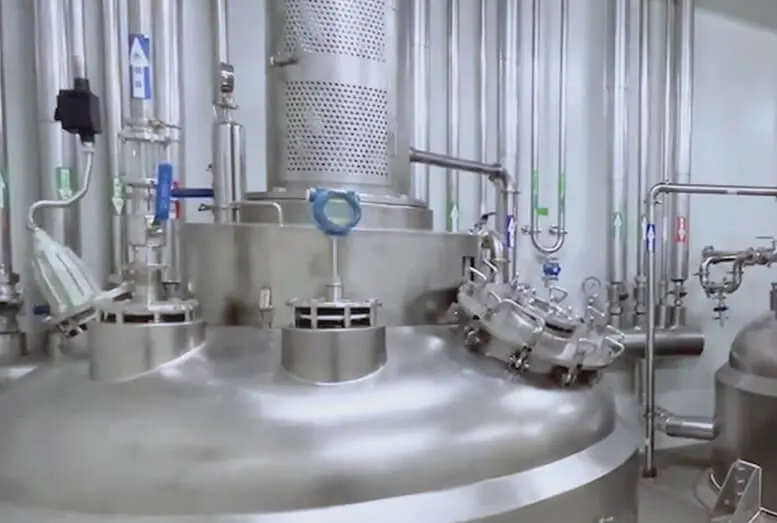
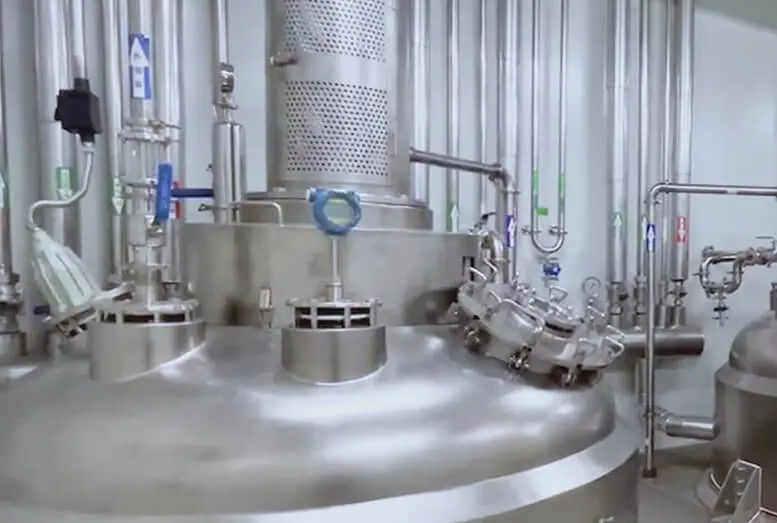
Jiangsu Jingye Pharmaceutical has technical capabilities in high-temperature and high-pressure reactions, hydrogenation, chiral synthesis, and high-vacuum distillation. Its production facilities include 86 reactors, with enamel and stainless-steel reactors ranging from 50 to 3,000 L.
This type of process infrastructure matters because different reaction steps may require different temperature, pressure, material compatibility, mixing, or separation conditions. A supplier with broader process capability has more options when optimizing or scaling a manufacturing route.
Analytical control should follow the process
Analytical testing is most useful when it is connected to process control. Finished-product testing alone can identify a failed batch, but process-oriented testing can help determine why the quality changed.
A robust production system can monitor critical raw materials, reaction intermediates, final purity, moisture, and other relevant parameters. The resulting data can then be used to identify process drift before it becomes a recurring commercial problem.
Jingye states that its QC organization has hundreds of analytical instruments and can support comprehensive analysis for commercial production. This capability is particularly relevant for customers who require technical communication beyond a standard COA.
R&D capability supports specification changes
Commercial chemical projects can change after initial qualification. A customer may increase annual demand, introduce a new downstream route, tighten an impurity limit, or require a different packaging configuration.
A supplier focused only on catalogue sales may have limited flexibility when these requirements appear. An integrated pharmaceutical enterprise with R&D and manufacturing capabilities can approach the problem from both process and production perspectives.
Jiangsu Jingye Pharmaceutical was founded in 1994 and restructured in 2016, and it combines R&D, production, and international trade. The company reports long-term cooperation with universities and research institutions, providing an additional technical foundation for process development and optimization.
EHS and quality systems are part of supply reliability
For chemical intermediates, manufacturing safety and environmental controls affect long-term supply stability. Reaction hazards, solvent handling, waste treatment, worker protection, and emergency systems all influence whether production can remain consistent.
Jiangsu Jingye operates a complete EHS system and reports ISO9001, ISO14001, and GB/T 45001 certifications, as well as a Drug Production License. It also states that production is operated in accordance with GMP standards.
These systems do not replace product-specific quality evaluation, but they provide important information when assessing the maturity of a chemical manufacturing operation. For regulated or export-oriented supply chains, quality and EHS documentation should be reviewed together with the product specification.
Packaging and storage protect the finished material
The final product specification is only meaningful if the material is protected after release. For 2-Amino-4'-Bromobenzophenone, Jingye specifies 25 kg fiber drums with double PE bags. Its storage guidance calls for a tightly closed container in a dry, cool, well-ventilated location.
This information should be aligned with the customer's warehouse conditions and shipping route. Long-distance international transport can introduce temperature variation, humidity exposure, handling events, and storage delays, making appropriate packaging and labeling essential.
For recurring shipments, packaging consistency also simplifies warehouse identification, batch traceability, and production material management.
International supply needs documentation discipline
A China supplier serving international customers needs to manage more than manufacturing. Export documentation, product identification, SDS, COA, packaging labels, shipping arrangements, and customer-specific documents all need to match the actual batch.
Jiangsu Jingye exports products to Europe, America, Southeast Asia, Japan, and South Korea. This international experience is relevant when customers need a supplier familiar with cross-border chemical shipment processes and the documentation requirements associated with different markets.
The exact regulatory requirements still depend on the destination country, transport classification, end use, and customer requirements, so these should be confirmed for each shipment rather than assumed from a general export statement.
A supplier should support the entire qualification process
A practical qualification program for 2-Amino-4'-Bromobenzophenone can move from specification review to sample evaluation, analytical verification, downstream reaction testing, commercial-batch assessment, and recurring supply.
At each stage, the critical questions are different. During laboratory evaluation, chemical identity and purity dominate. During process validation, impurity behavior and batch consistency become more important. During commercial supply, production capacity, lead time, documentation, packaging, and change control become equally relevant.
This is why the right 2-Amino-4'-Bromobenzophenone intermediate supplier China should be evaluated as a manufacturing partner rather than simply as a catalogue listing. Current market sources show that the material is available from numerous suppliers, including reagent companies, traders, and manufacturers.
For Jiangsu Jingye Pharmaceutical, the combination of R&D, production, analytical testing, GMP-oriented management, EHS infrastructure, and international trade provides a foundation for supplying 2-Amino-4'-Bromobenzophenone from initial technical evaluation through larger-scale commercial requirements. The key is to match the product specification and manufacturing controls to the customer's actual downstream process, so that quality is measured not only by a COA but by reproducible performance throughout the complete synthesis route.