
 English
  Italian
  Spanish
  Thai
Thai  Japanese
  Portuguese
  Korean
  Russian
  French
  German
  Polish
  Arabic
  Indonesian
Finding a 2-Amino-4'-Bromobenzophenone intermediate supplier China for laboratory research is relatively straightforward, but scaling the same intermediate into a repeatable commercial supply requires a different evaluation. The transition from a small development batch to regular kilogram-scale or larger production introduces new requirements for process control, reactor suitability, analytical consistency, packaging, and delivery reliability.
2-Amino-4'-Bromobenzophenone, CAS 1140-17-6, is commercially supplied as an organic and pharmaceutical intermediate. Published data identifies its molecular formula as C13H10BrNO and molecular weight as 276.13 g/mol, while commercial specifications commonly define purity through HPLC analysis.
Laboratory supply and commercial supply are different problems
A research laboratory may purchase 1 g, 5 g, or 100 g quantities and focus primarily on identity and purity. Commercial production introduces additional variables: batch size, reaction reproducibility, raw-material sourcing, equipment compatibility, filtration, drying, packaging, and release testing.
This difference can be seen in the current market. TCI lists 2-Amino-4'-Bromobenzophenone at 1 g and 5 g research-pack sizes with a purity specification above 98%. Commercial Chinese suppliers, meanwhile, advertise packaging such as 25 kg and larger quantities.
For a production project, the relevant question is therefore not whether a supplier can provide a sample. It is whether the same quality can be reproduced at the required manufacturing scale.
Reactor capability influences process flexibility
Chemical manufacturing scale-up is not achieved simply by multiplying laboratory quantities. Heat transfer, mixing, reaction kinetics, mass transfer, addition rates, pressure control, and temperature uniformity can change when reactor volume increases.
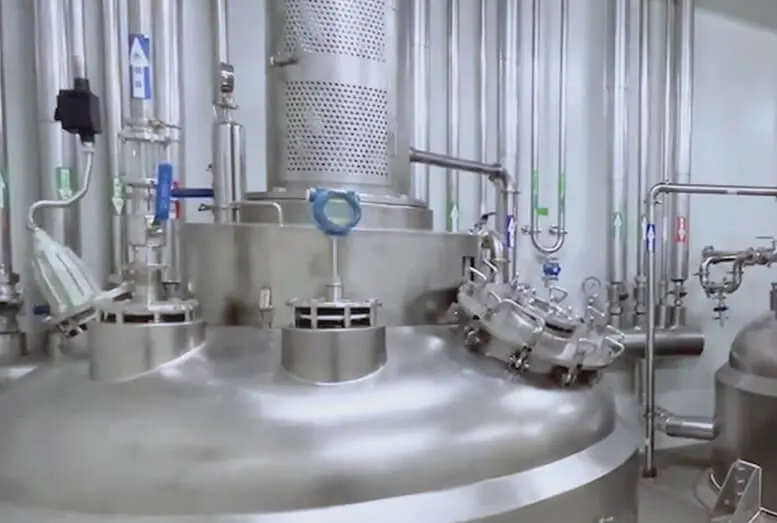
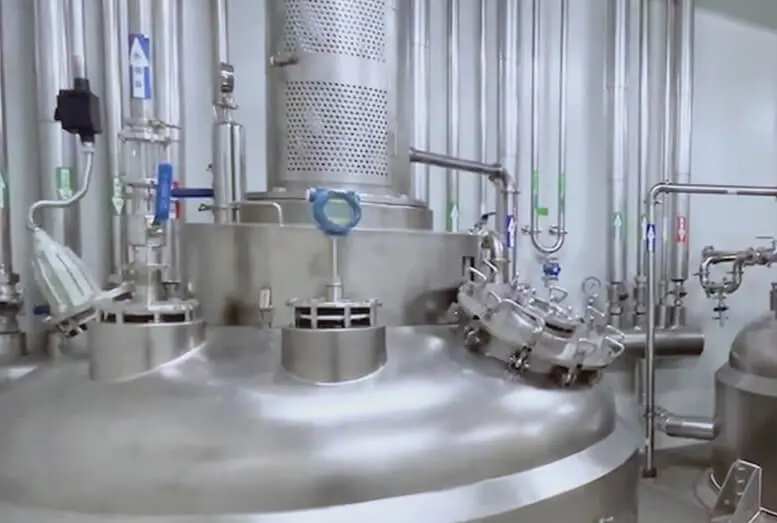
Jiangsu Jingye Pharmaceutical reports 86 reactors, including 69 enamel reactors from 50 to 3,000 L and 18 stainless-steel reactors from 50 to 3,000 L.
For an intermediate such as 2-Amino-4'-Bromobenzophenone, this type of equipment range can provide flexibility when selecting an appropriate production scale. The correct reactor is determined by the process chemistry, material compatibility, batch size, heat-transfer requirements, and reaction conditions rather than by volume alone.
This becomes particularly important when a customer moves from development quantities to repeated commercial batches. A supplier with multiple reactor sizes can potentially optimize batch scale while maintaining process controls instead of forcing every order into one production configuration.
Process consistency should be demonstrated through batches
A single successful batch does not establish commercial consistency. A stronger qualification approach compares several production batches and examines the same critical quality attributes across them.
For 2-Amino-4'-Bromobenzophenone, relevant indicators may include HPLC assay, related substances, loss on drying, appearance, identity, and other customer-defined parameters. Jingye currently specifies HPLC purity at 98.5% minimum and loss on drying at 0.5% maximum.
Batch-to-batch consistency matters because the intermediate enters another chemical transformation. If impurity levels fluctuate significantly, downstream reaction yield or purification requirements can also change. This can increase solvent consumption, purification time, analytical workload, and overall manufacturing cost even when the purchase price of the intermediate remains unchanged.
Analytical instruments support scale-up decisions
Quality control should not be separated from production engineering. Analytical data provides feedback on whether a process is behaving consistently and whether changes in raw materials, equipment, or operating conditions are affecting the final product.
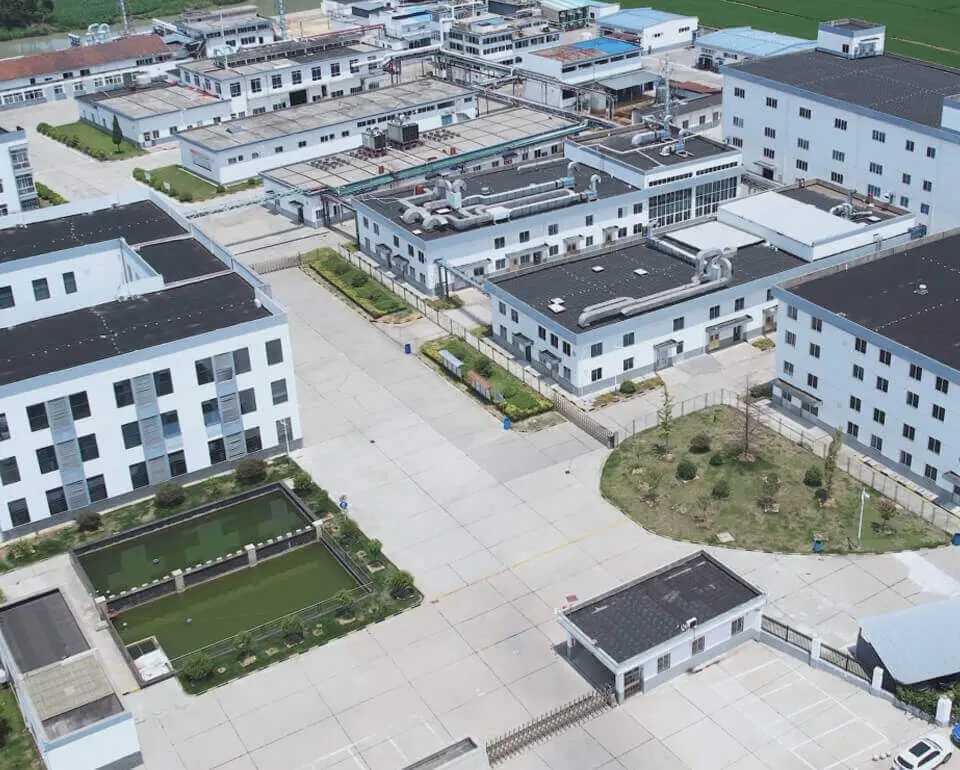
Jiangsu Jingye states that its QC department has hundreds of analytical instruments and that its facilities can support commercial production and comprehensive analysis of the product.
For an international customer, the value of this capability is practical. A supplier should be able to provide reproducible COAs, investigate atypical results, retain appropriate samples, and communicate analytical findings when a batch deviates from historical performance.
GMP-oriented management supports controlled production
Pharmaceutical intermediates may ultimately enter regulated manufacturing chains, so production controls need to be more structured than those used for ordinary commodity chemicals.
Jiangsu Jingye Pharmaceutical states that its operations follow GMP standards and that it holds a Drug Production License together with ISO9001, ISO14001, and GB/T 45001 certifications. The company also maintains a complete EHS system. These qualifications should be evaluated in the context of the specific product and customer quality agreement rather than treated as substitutes for product-specific qualification.
For customers developing regulated pharmaceutical processes, documentation, traceability, change control, deviation handling, and analytical records can be just as important as the initial product specification.
Packaging becomes a manufacturing consideration at scale
At commercial volume, packaging is not merely a logistics decision. It influences moisture protection, handling efficiency, warehouse management, labeling, and product traceability.
Jingye's current product information specifies 25 kg fiber drums with double PE bags and palletization using non-fumigated wooden pallets.
For larger or recurring shipments, customers may also need packaging adjusted to their warehouse and production systems. The supplier should confirm whether the packaging format, labeling, pallet configuration, and documentation can remain consistent from shipment to shipment.
International supply requires more than production capacity
A China-based intermediate supplier also needs to manage international delivery. Jiangsu Jingye reports exports to Europe, America, Southeast Asia, Japan, and South Korea, indicating experience with international markets.
For a commercial supply program, lead time should be evaluated against production scheduling rather than catalogue stock alone. Questions should include standard production lead time, sample lead time, batch release timing, packaging preparation, export documentation, and contingency arrangements when demand changes.
This becomes especially relevant when 2-Amino-4'-Bromobenzophenone is a critical intermediate in a multi-step manufacturing route. A delayed intermediate can affect reactor scheduling and downstream production even when the material itself has a relatively small share of total manufacturing cost.
When custom requirements become necessary
Commercial customers do not always require the same specification. A development-stage process may accept a broader impurity profile, while a validated production process may require tighter control of selected impurities.
A capable 2-Amino-4'-Bromobenzophenone intermediate supplier China should therefore be able to discuss customer-specific specifications without compromising analytical traceability. The process may involve defining critical quality attributes, agreeing on test methods, setting acceptance limits, and confirming packaging and storage requirements.
Jiangsu Jingye's R&D and production capabilities include high-temperature and high-pressure reactions, hydrogenation, chiral synthesis, and high-vacuum distillation. These capabilities are relevant when the intermediate is part of a broader custom synthesis or process-development program rather than a simple catalogue purchase.
From sample approval to recurring supply
A sensible qualification process can begin with a technical data review and laboratory sample, followed by analytical comparison and small-scale process verification. If the results meet requirements, the next step is to evaluate representative commercial batches rather than immediately assuming that sample quality will remain unchanged at production scale.
For recurring supply, the evaluation should cover specification, batch consistency, manufacturing capacity, QC capability, GMP-related controls where relevant, packaging, documentation, EHS management, and international logistics.
For 2-Amino-4'-Bromobenzophenone, this scale-up perspective is especially important because the commercial value of an intermediate depends not only on its chemical identity but also on its ability to enter the customer's downstream process with predictable quality. A supplier with integrated R&D, manufacturing, analytical testing, and international trade capabilities can provide a more structured path from initial sample to long-term supply.