
 English
  Italian
  Spanish
  Thai
Thai  Japanese
  Portuguese
  Korean
  Russian
  French
  German
  Polish
  Arabic
  Indonesian
When sourcing a 2-Amino-4'-Bromobenzophenone intermediate supplier China, product name and quoted purity are only the starting points. For pharmaceutical and fine-chemical synthesis, the more important question is whether the intermediate can provide consistent chemical quality from batch to batch and remain compatible with the customer's downstream reaction process.

2-Amino-4'-Bromobenzophenone is commonly identified as CAS 1140-17-6, with the chemical name (2-aminophenyl)(4-bromophenyl)methanone and molecular formula C13H10BrNO. Published commercial specifications commonly use HPLC purity, appearance, loss on drying, and impurity limits as core quality indicators.
Purity should be evaluated beyond one HPLC number
A specification such as “98.5% min HPLC” provides an important starting point, but it does not describe the complete quality profile of an intermediate. Two batches with the same assay result can behave differently in downstream synthesis if their impurity profiles, moisture levels, or residual solvents are different.
For 2-Amino-4'-Bromobenzophenone, the current Jingye specification lists yellow crystalline powder as the appearance requirement, HPLC purity of 98.5% minimum, and loss on drying of 0.5% maximum. The product page also identifies 25 kg fiber drums with double PE inner bags as the standard packaging configuration.
For process development and commercial manufacturing, the practical evaluation should therefore include HPLC assay, related substances or total impurities, moisture or loss on drying, appearance, and analytical identity. Where the downstream process is particularly sensitive, additional customer-specific impurity controls can be discussed before commercial production.
Impurity control affects downstream chemistry
An intermediate is not simply a raw material that needs to “pass” a purity threshold. Its impurity profile can influence reaction selectivity, catalyst consumption, crystallization behavior, color, yield, and the purification burden of the next step.
This is especially relevant for molecules containing both an amino group and an aryl bromide. The amino functionality and bromine substituent provide useful synthetic handles, but the same functional groups make control of reaction-related impurities important when the material enters a multi-step synthesis.
A supplier should therefore be able to provide a defined specification and corresponding analytical data rather than relying exclusively on a generic certificate. The objective is to establish whether the material behaves consistently in the customer's actual process.
Analytical capability is part of supplier qualification
A reliable 2-Amino-4'-Bromobenzophenone intermediate supplier China should be able to connect production with analytical verification. At minimum, the quality system should establish how incoming raw materials, in-process material, finished product, and retained samples are controlled.
Jiangsu Jingye Pharmaceutical states that it operates modern production facilities and advanced analytical instruments under GMP-oriented management, with a complete EHS system. Its certifications include ISO9001, ISO14001, and GB/T 45001, while the company also holds a Drug Production License. These systems provide a framework for controlling production, environmental management, occupational safety, and quality processes.
The analytical method is equally important. If a customer specifies HPLC purity, the method, sample preparation, chromatographic conditions, calculation approach, and acceptance criteria should remain consistent between development and commercial batches. This makes trend analysis much more meaningful.
Moisture and packaging should not be overlooked
Loss on drying is a practical specification because moisture can affect weighing accuracy and, depending on the downstream reaction, reaction concentration and reproducibility. Jingye specifies loss on drying at no more than 0.5% for this product.
Packaging then becomes part of maintaining that specification after production. The current Jingye product information specifies a 25 kg fiber drum with double PE bags. The product is also recommended to be kept tightly closed in a dry, cool, well-ventilated environment and protected from conditions that could promote contamination or degradation.
For international shipments, packaging should be considered together with transport duration, warehouse conditions, palletization, labeling, and document requirements. A material that meets the specification when released from the factory still needs appropriate packaging and logistics controls to arrive in equivalent condition.
Manufacturing scale matters when demand increases
Laboratory availability does not necessarily demonstrate commercial manufacturing capability. Public supplier listings show that 2-Amino-4'-Bromobenzophenone is available from numerous companies in China, including manufacturers, traders, and reagent suppliers.
The distinction becomes important when a project moves from grams or kilograms to recurring commercial supply. A manufacturer should be able to demonstrate reactor capacity, batch control, analytical capability, production scheduling, packaging capacity, and quality traceability.
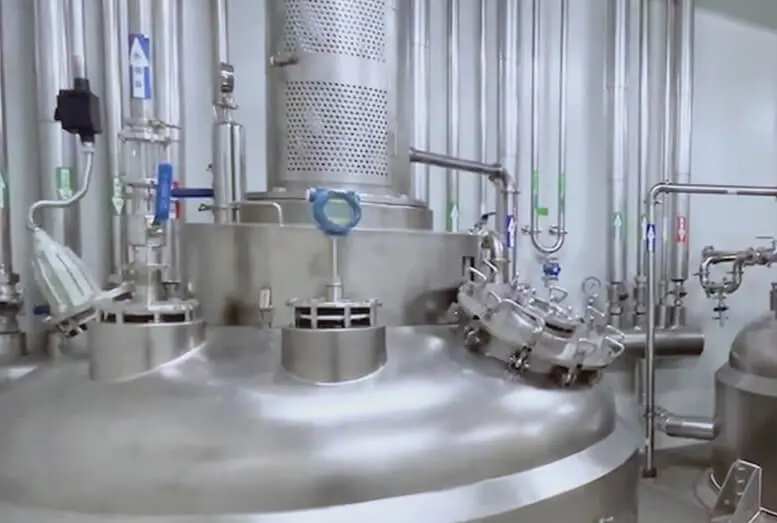
Jiangsu Jingye Pharmaceutical operates a production site covering approximately 50,000 square meters and reports 86 reactors, including 69 enamel reactors ranging from 50 to 3,000 L and 18 stainless-steel reactors ranging from 50 to 3,000 L. Its QC organization is equipped with a broad range of analytical instruments.
Such infrastructure is more relevant to commercial sourcing than simply having material listed in an online catalogue.
Technical support becomes important for custom requirements
Different downstream processes may require different quality-control strategies. One customer may prioritize high assay and low moisture, while another may need tighter control of a particular related substance because it interferes with the next synthetic step.
A capable supplier should therefore be able to discuss specification adjustment, analytical requirements, packaging, batch size, and delivery planning before the first commercial order. This is particularly valuable when the intermediate is part of a multi-step pharmaceutical or specialty-chemical route.
Jiangsu Jingye Pharmaceutical combines R&D, production, and international trade and reports technical capabilities in high-temperature and high-pressure reactions, hydrogenation, chiral synthesis, and high-vacuum distillation. These capabilities provide a broader process-development platform when customers require more than catalogue supply.
A practical evaluation framework
The evaluation of a 2-Amino-4'-Bromobenzophenone intermediate supplier China should start with chemical identity and specification, then move to batch consistency, analytical methods, impurity control, manufacturing scale, packaging, documentation, and logistics.
A useful qualification package should include the product specification, representative COA, analytical methodology where appropriate, SDS, packaging information, production and quality-system information, and a clear approach to handling deviations or customer-specific requirements.
For commercial synthesis, the best supplier relationship is not defined by the lowest quoted price or the highest advertised purity alone. Consistent material quality, controlled impurity profiles, reliable analytical data, scalable production, and stable international supply determine whether 2-Amino-4'-Bromobenzophenone can function as a dependable intermediate in a real manufacturing process.