
 English
  Italian
  Spanish
  Thai
Thai  Japanese
  Portuguese
  Korean
  Russian
  French
  German
  Polish
  Arabic
  Indonesian
For pharmaceutical companies sourcing intermediates internationally, large-scale production involves three interconnected requirements: chemical process capability, manufacturing consistency, and regulatory control. A supplier may achieve high purity in a laboratory batch, but commercial manufacturing requires the same quality profile to be reproduced across larger reactor volumes and multiple production batches.
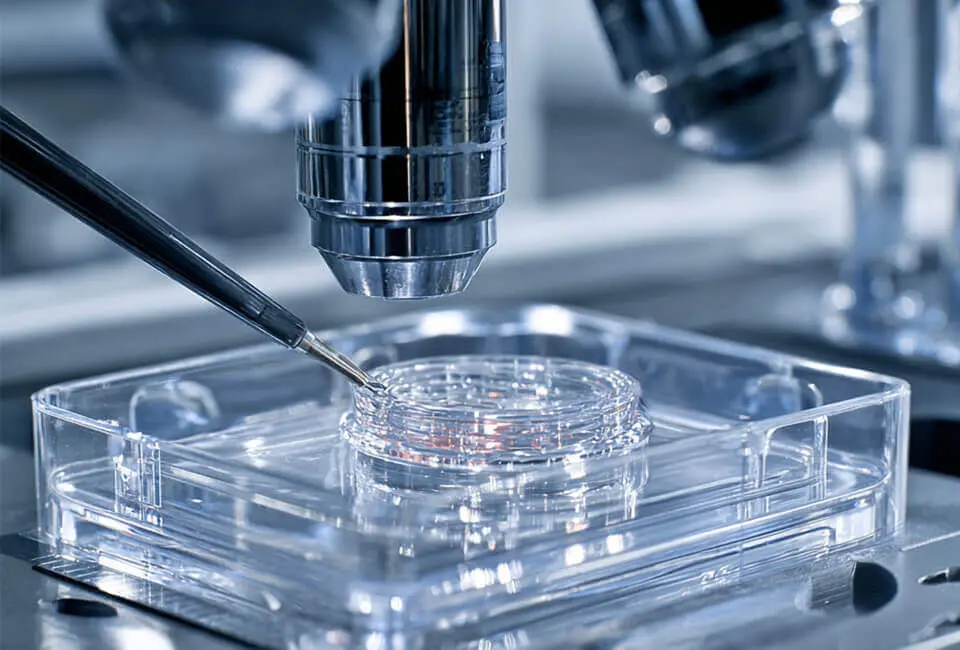
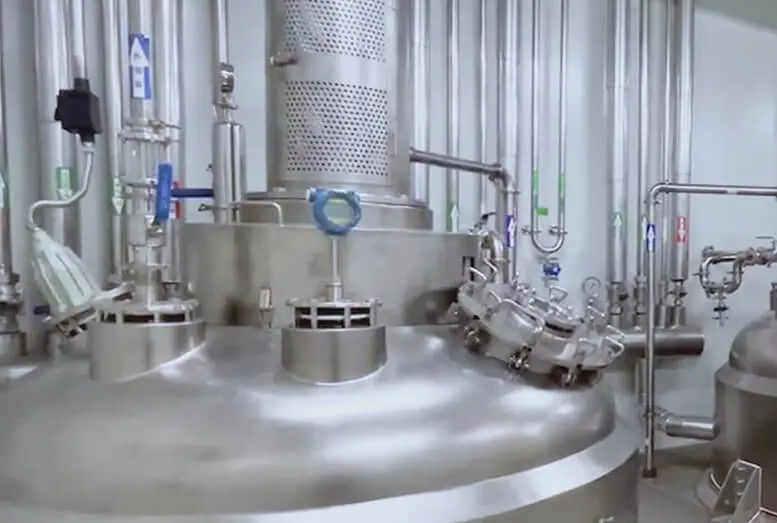
A large scale reactor pharmaceutical intermediates manufacturer China must therefore provide more than manufacturing capacity. The supplier needs appropriate reaction equipment, process engineering, analytical capabilities, GMP systems, environmental controls, and experience with complex synthesis routes.
Jiangsu Jingye Pharmaceutical combines these capabilities across R&D, production, quality management, and international pharmaceutical trade, making the relationship between process development and commercial manufacturing an important part of its operating model.
Commercial Production Requires Controlled Reaction Conditions
In pharmaceutical intermediate manufacturing, critical process parameters can include reaction temperature, pressure, pH, reagent addition rate, agitation, reaction time, and solvent composition. Changes in any of these variables can influence conversion, selectivity, impurity formation, and final yield.
The challenge becomes greater as reactor volume increases. A production reactor must maintain sufficiently uniform conditions throughout the reaction mass. Local overheating, insufficient mixing, or delayed reagent dispersion can produce conditions that are not visible from a single temperature or pressure reading.
For this reason, large-scale reactor design should consider agitation geometry, heat-transfer area, feed location, cooling capacity, and control-system response together.
High-Temperature and High-Pressure Chemistry
Some advanced pharmaceutical intermediates require high-temperature or high-pressure reaction conditions to achieve the desired conversion or selectivity. Such processes place additional requirements on reactor design, sealing systems, instrumentation, pressure control, and EHS management.
A commercial facility must be capable of maintaining stable operating parameters while providing appropriate protection against abnormal conditions. The engineering challenge is not simply reaching a target pressure or temperature, but controlling these parameters consistently throughout the batch.
Jiangsu Jingye Pharmaceutical has established capabilities in high-temperature and high-pressure reactions, supporting pharmaceutical intermediate projects that require more demanding process conditions.
Hydrogenation: Managing Reaction and Safety Together
Hydrogenation combines chemical reaction requirements with significant process-safety considerations. Hydrogen pressure, temperature, catalyst loading, agitation, and gas-liquid mass transfer must be controlled simultaneously.
At production scale, insufficient gas dispersion can reduce reaction efficiency, while poor temperature control can affect selectivity or increase thermal risk. Catalyst filtration and recovery can also become important downstream considerations.
A qualified manufacturing system should therefore integrate hydrogenation reactor design, pressure control, cooling, agitation, catalyst management, analytical monitoring, and EHS procedures.
This integrated approach helps ensure that hydrogenation performance remains consistent when moving from development batches to larger commercial production.
High-Vacuum Distillation for Sensitive Intermediates
Purification is often a decisive stage in determining the final quality and yield of pharmaceutical intermediates. High-vacuum distillation can be particularly useful when compounds have high normal boiling points or are susceptible to thermal degradation.
Lowering operating pressure reduces the boiling temperature, potentially minimizing thermal exposure. However, industrial vacuum distillation requires stable vacuum conditions and sufficient condenser capacity. Leakage, poor condensation, inadequate heat transfer, or unstable feed rates can negatively affect separation.
For manufacturers handling high-value intermediates, purification should therefore be assessed in terms of recovery rate, purity, cycle time, solvent consumption, and thermal exposure.
Jiangsu Jingye Pharmaceutical's high-vacuum distillation capability complements its reaction and synthesis infrastructure, supporting integrated production rather than relying on a fragmented manufacturing process.
Chiral Synthesis Requires Higher Analytical Control
Chiral intermediates introduce additional quality requirements because the desired stereoisomer may need to be controlled at a high level. Maintaining chiral purity requires stable reaction conditions and appropriate analytical methods.
Process parameters such as catalyst selection, reagent ratio, solvent, temperature, and reaction time can influence stereoselectivity. During scale-up, changes in mixing and heat transfer can indirectly affect these parameters.
Advanced analytical instruments therefore play an important role in verifying product quality. A manufacturing facility should be capable of monitoring not only overall assay but also relevant impurities and stereochemical purity where required.
Jiangsu Jingye Pharmaceutical maintains advanced analytical instruments and a professional technical team to support pharmaceutical R&D and manufacturing activities.
GMP Is a Production System, Not Just a Certificate
For pharmaceutical intermediates, GMP compliance should be reflected in the manufacturing process itself. Equipment qualification, cleaning procedures, raw material traceability, batch documentation, process controls, deviation handling, and change management all contribute to consistent production.
This becomes especially important for international supply. Customers need confidence that a batch manufactured in China can meet predefined specifications repeatedly rather than only passing an individual final inspection.
Jiangsu Jingye Pharmaceutical operates in accordance with GMP standards and holds a Drug Production License. Its management systems also include ISO9001, ISO14001, and GB/T 45001 certifications, providing structured support for quality, environmental, and occupational health and safety management.
EHS Capability Becomes More Important at Larger Scale
Scale increases both production efficiency and the potential consequences of process deviations. Large quantities of solvents, reactive substances, pressurized gases, and high-temperature materials require systematic hazard identification and control.
An effective EHS system should address chemical storage, reaction hazards, pressure systems, solvent handling, emissions, waste treatment, emergency response, and worker protection.
For high-temperature, high-pressure, hydrogenation, and vacuum processes, EHS should be integrated into process design rather than added after the production system has already been established.
International Supply Requires More Than Manufacturing
A pharmaceutical intermediate manufacturer serving international markets must also understand documentation, quality communication, specification management, and consistent batch delivery. Clear technical communication becomes particularly important when the customer and manufacturing site are located in different countries.
Jiangsu Jingye Pharmaceutical has supplied products to Europe, America, Southeast Asia, Japan, and South Korea. Its international business experience is supported by an integrated operation covering R&D, production, analytical testing, and pharmaceutical trade.
This structure can simplify technical communication when a project involves process development, scale-up, specification confirmation, and recurring commercial supply.
How to Evaluate a Large-Scale Supplier
A practical assessment should examine the manufacturer's reactor capabilities, temperature and pressure range, hydrogenation experience, vacuum distillation systems, analytical equipment, GMP controls, EHS infrastructure, technical team, and previous experience with similar chemistry.
The manufacturer's ability to support scale-up is particularly important. A strong supplier should be able to explain how process parameters are transferred from smaller-scale development to commercial reactors and how critical quality attributes are monitored throughout production.
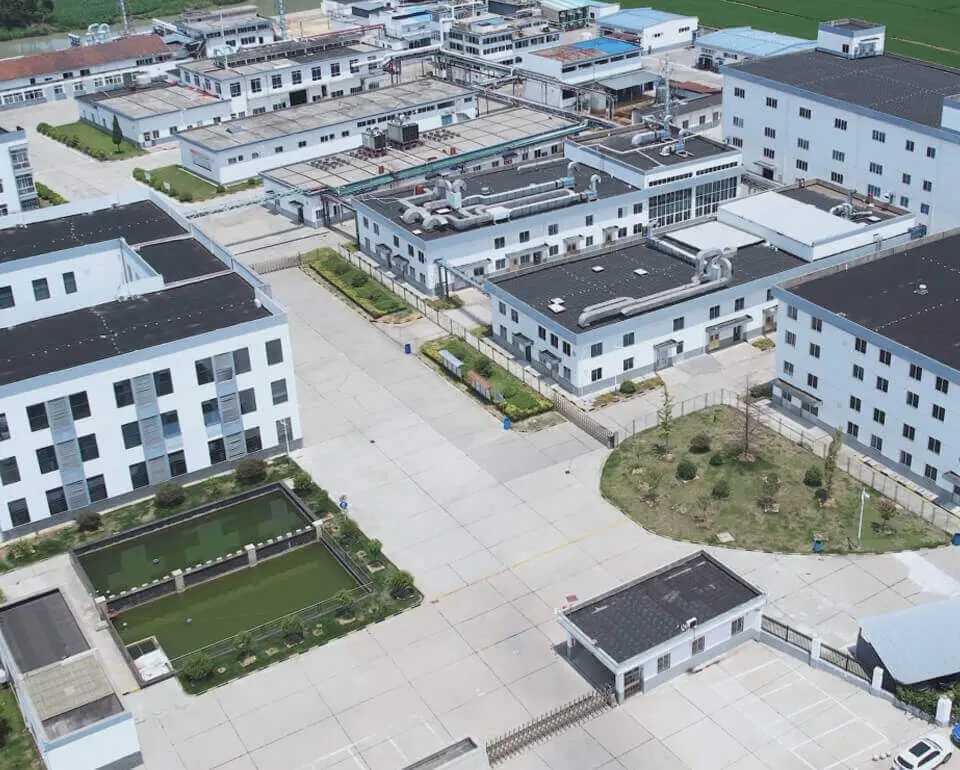
Jiangsu Jingye Pharmaceutical has been active in pharmaceutical R&D and manufacturing since 1994, with a 50,000-square-meter operation in Changzhou and long-term cooperation with universities and research institutions. Its technical capabilities in high-temperature and high-pressure reactions, hydrogenation, chiral synthesis, and high-vacuum distillation provide a broad platform for complex pharmaceutical intermediate projects.
Conclusion
The selection of a large scale reactor pharmaceutical intermediates manufacturer China should be based on process capability rather than equipment size alone. Commercial success depends on whether the manufacturer can combine reactor engineering, chemical synthesis, purification, analytical control, GMP compliance, and EHS management into a reproducible production system.
For demanding pharmaceutical intermediate projects, this integrated capability reduces scale-up uncertainty and supports stable quality across commercial batches. Jiangsu Jingye Pharmaceutical's combination of manufacturing infrastructure, technical expertise, analytical capabilities, GMP operation, and international supply experience provides a suitable foundation for customers seeking controlled and scalable pharmaceutical intermediate production in China.