

 English
  Italian
  Spanish
  Thai
Thai  Japanese
  Portuguese
  Korean
  Russian
  French
  German
  Polish
  Arabic
  Indonesian
For pharmaceutical manufacturers, sourcing an intermediate at commercial scale requires significantly more technical evaluation than confirming a product specification. The supplier must demonstrate that the synthesis can be reproduced consistently, that critical impurities remain controlled, and that the production process can scale from development quantities to stable bulk manufacturing.
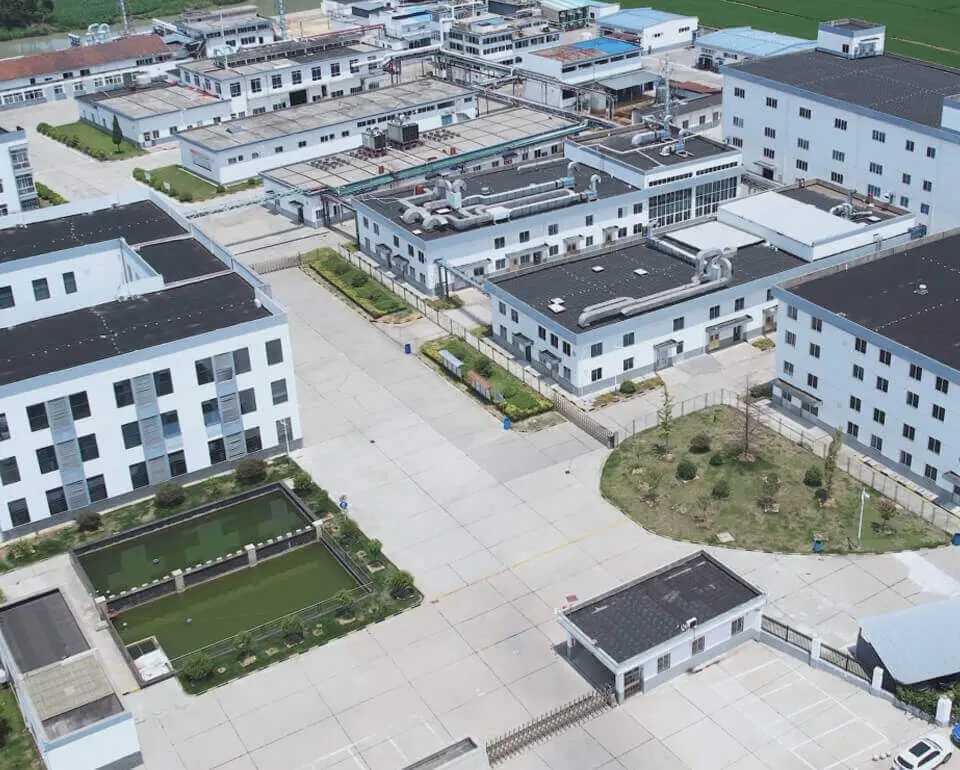
A qualified bulk pharmaceutical intermediates supplier should therefore function as an extension of the pharmaceutical supply chain. Its reaction equipment, purification technologies, analytical laboratory, quality system, and production controls all contribute to the performance of the intermediate received by the customer.
From Process Development to Commercial Manufacturing
The manufacturing route of an intermediate is usually established during process development, but commercial production introduces new engineering variables.
Reaction volume increases, mixing characteristics change, heat transfer becomes slower relative to total volume, and gas-liquid mass transfer can become more difficult.
These differences are particularly important for high-temperature, high-pressure, hydrogenation, and other reaction-intensive processes.
Jiangsu Jingye Pharmaceutical has technical capabilities covering high-temperature and high-pressure reactions, hydrogenation, chiral synthesis, and high-vacuum distillation, allowing different chemical routes to be matched with appropriate process technologies.
The value of such capabilities is not simply equipment availability. It is the ability to maintain controlled reaction conditions during scale-up.
High-Temperature and High-Pressure Reactions Require Controlled Engineering
High-temperature and high-pressure chemistry can improve reaction kinetics or enable transformations that are difficult under conventional conditions.
However, pressure and temperature increase the engineering consequences of process deviations.
Reactor design, pressure rating, temperature-control capacity, instrumentation, relief systems, agitation, and material compatibility all become important.
For a commercial intermediate, process control should maintain the defined operating range throughout the reaction rather than relying on manual intervention.
This is particularly important for exothermic reactions where heat generation may increase rapidly after a reaction reaches a certain conversion point.
Hydrogenation Depends on More Than Hydrogen Pressure
Hydrogenation is widely used in pharmaceutical intermediate synthesis, but simply specifying hydrogen pressure does not fully define the process.
Catalyst type and loading, solvent, temperature, agitation, hydrogen availability, reaction time, and substrate concentration can all affect conversion and selectivity.
Mass transfer becomes increasingly important at larger scale because hydrogen must move from the gas phase into the liquid phase and then to the catalyst surface.
A commercial supplier should therefore understand the relationship between reactor geometry, agitation, gas dispersion, and reaction kinetics.
Consistent hydrogenation performance can help reduce over-reduction, incomplete conversion, and formation of unwanted by-products.
Chiral Synthesis Requires Tight Process Control
Chiral intermediates present additional analytical and process requirements because the desired stereochemical form must be controlled.
Depending on the synthetic route, control may involve asymmetric synthesis, chiral catalysts, resolution, or other stereoselective approaches.
The final specification may need to include enantiomeric purity or other stereochemical parameters in addition to conventional assay and impurity testing.
For customers using the intermediate in a multi-step API process, stereochemical consistency is particularly important because downstream purification may not be designed to correct significant variation in the incoming material.
High-Vacuum Distillation Supports Difficult Separations
Distillation is often used to remove solvents, separate volatile impurities, or purify compounds according to differences in volatility.
High-vacuum distillation can reduce boiling temperatures by lowering system pressure, which can be useful for compounds that are thermally sensitive.
However, performance depends on stable vacuum conditions, temperature control, condenser capacity, feed characteristics, residence time, and equipment configuration.
If the vacuum level fluctuates significantly, separation performance may change and thermal exposure may increase.
A supplier with high-vacuum distillation capability can therefore provide an additional purification route when conventional atmospheric or reduced-pressure distillation is insufficient.
Specifications Should Reflect the Downstream Process
A pharmaceutical intermediate specification should be connected to how the material will be used.
Assay is important, but it may not fully predict downstream performance.
Residual solvents, water content, inorganic residues, specific organic impurities, stereochemical purity, particle characteristics, and physical form can influence subsequent synthesis.
For example, excessive water may interfere with moisture-sensitive chemistry. A particular residual solvent may affect a downstream reaction or crystallization process.
This is why supplier qualification should include discussion of critical quality attributes rather than relying only on a generic certificate of analysis.
Analytical Methods Must Be Fit for Purpose
A modern pharmaceutical laboratory needs analytical methods capable of detecting the impurities relevant to the manufacturing route.
HPLC can be used for assay and related-substance analysis, while GC can support residual-solvent and volatile-component testing.
Karl Fischer analysis can quantify water content where moisture is a critical parameter.
For more complex structural confirmation or investigation work, techniques such as NMR or mass spectrometry may provide additional information.
Jiangsu Jingye Pharmaceutical maintains advanced analytical instruments and a professional technical team to support its pharmaceutical production activities.
The critical factor is not simply the number of instruments but whether analytical procedures can reliably distinguish acceptable material from material that may create downstream process risk.
Quality Systems Protect Batch-to-Batch Consistency
Commercial pharmaceutical production requires documented and controlled processes.
A suitable quality system should address raw-material qualification, production records, analytical testing, equipment maintenance, deviations, CAPA, change control, documentation, and final release.
ISO 9001 provides a quality-management framework, while pharmaceutical GMP principles address the specific controls required for pharmaceutical manufacturing.
Jiangsu Jingye Pharmaceutical operates according to GMP standards and maintains ISO 9001, ISO 14001, and GB/T 45001 certifications.
These systems provide a structured foundation for controlling manufacturing, environmental, and occupational-health risks.
Supplier Capacity Should Include Process Flexibility
A bulk pharmaceutical intermediates supplier may need to support both established products and customized manufacturing requirements.
Different intermediates may require different reactor configurations, purification methods, solvents, temperatures, pressures, or analytical methods.
Jiangsu Jingye Pharmaceutical combines R&D, production, and international trade and maintains long-term cooperation with universities and research institutions.
This R&D connection can be valuable when process optimization or route-development support is required during commercialization.
Production Traceability Supports Global Supply Chains
International pharmaceutical supply chains require reliable batch documentation.
Customers may need certificates of analysis, manufacturing information, packaging specifications, shipping documents, and other quality records.
Traceability should connect each finished batch with its raw materials, manufacturing records, analytical results, and release status.
This provides a stronger foundation for investigations if an unexpected result occurs during downstream production.
Why Long-Term Supplier Relationships Matter
Changing an intermediate supplier can require technical qualification, analytical comparison, process verification, and potentially regulatory assessment.
For this reason, supplier stability can have measurable value.
A supplier that consistently maintains manufacturing parameters and product specifications reduces the need for repeated technical qualification.
Jiangsu Jingye Pharmaceutical was founded in 1994 and restructured in 2016, with its pharmaceutical operations covering R&D, manufacturing, and international trade.
Its experience in supplying Europe, America, Southeast Asia, Japan, and South Korea also provides an established international supply framework.
Conclusion
A bulk pharmaceutical intermediates supplier should be selected according to its ability to control chemistry at commercial scale, not merely its ability to provide a product with a stated purity.
Capabilities in hydrogenation, high-temperature and high-pressure reactions, chiral synthesis, high-vacuum distillation, analytical testing, GMP manufacturing, and process development can directly affect intermediate consistency.
For pharmaceutical manufacturers seeking stable long-term supply, a supplier with integrated R&D, production, quality, analytical, and EHS capabilities provides a stronger foundation for scaling production while controlling technical and supply-chain risk.
![Choosing a 2-Bromo-1-[4-(methylsulfonyl)phenyl]-1-ethanone Pharmaceutical Intermediate Supplier China](/uploads/upload/20261015/261015160435145.webp)