

 English
  Italian
  Spanish
  Thai
Thai  Japanese
  Portuguese
  Korean
  Russian
  French
  German
  Polish
  Arabic
  Indonesian
Dibenzosuberone is an important pharmaceutical intermediate where supplier selection cannot be based on assay alone. For downstream synthesis, process development, and commercial manufacturing, the supplier must demonstrate consistent chemical quality, controlled impurity profiles, reliable batch-to-batch reproducibility, and sufficient process capability. A qualified Dibenzosuberone intermediate supplier should therefore provide more than a specification sheet: it should offer a controlled manufacturing process, analytical verification, documentation, and a supply system capable of supporting different project stages.
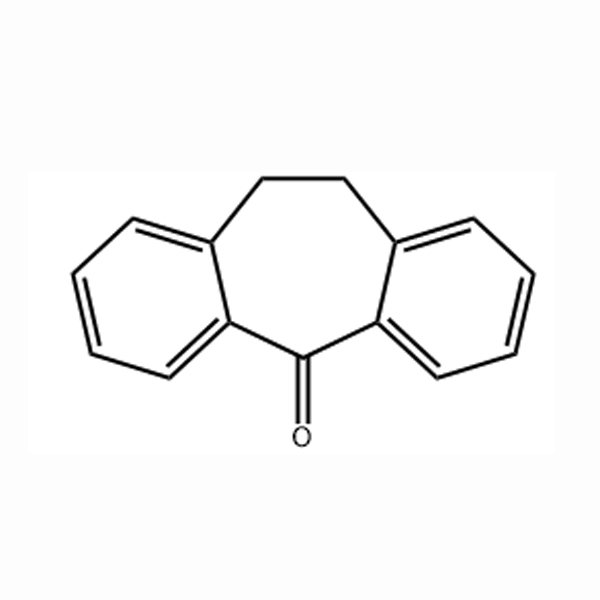
Why Dibenzosuberone Quality Matters in Downstream Synthesis
Dibenzosuberone is commonly treated as a synthetic building block rather than a final pharmaceutical product, but its quality can directly influence subsequent reactions. Variations in assay, residual solvents, moisture, trace inorganic impurities, or organic by-products may affect reaction conversion, selectivity, purification load, and ultimately the yield of the next intermediate.
For this reason, a practical supplier evaluation should look beyond a single assay value. A material reported at ≥98% assay, for example, may still behave differently from another batch with the same nominal assay if the impurity distribution is different. For process chemistry, impurity identity and consistency can be as important as the headline purity figure.
A reliable supplier should establish appropriate controls for raw materials, reaction conditions, work-up, purification, drying, packaging, and storage. These controls create a reproducible material profile that is more useful for downstream manufacturing than an isolated laboratory test result.
Evaluate the Manufacturing Process, Not Only the Product Specification
The production route used for Dibenzosuberone can influence impurity formation and manufacturing consistency. Reaction temperature, pressure, reaction time, catalyst selection, solvent system, and purification strategy all affect the final material.
A manufacturer with capabilities in high-temperature and high-pressure reactions can manage reaction systems that require tighter process control than conventional batch chemistry. Hydrogenation capability is also relevant when the synthetic route involves catalytic reduction or related transformations.
High-vacuum distillation provides another useful process capability, particularly when purification depends on controlled removal of volatile components or separation of closely related compounds. Rather than relying exclusively on downstream recrystallization, an integrated manufacturer can design purification around the actual impurity profile generated by the process.
For customers evaluating a Dibenzosuberone intermediate supplier, the key question is therefore not simply “What is the purity?” but “How consistently can the supplier manufacture this purity specification?”
Analytical Control Should Match the Intended Application
Analytical capability is fundamental when evaluating pharmaceutical intermediates. A supplier should have appropriate analytical instruments and validated or suitably qualified methods for release testing and process monitoring.
Typical quality evaluation may include assay, related substances, residual solvents, moisture or water content, and other parameters defined by the customer's specification or applicable quality requirements. The analytical method should be capable of distinguishing the principal component from relevant process-related impurities.
For development-stage projects, analytical data can also support process optimization. If a customer changes reaction conditions, solvent systems, or purification parameters, historical batch data from the supplier can help determine whether observed changes originate from the starting intermediate or the downstream process.
This makes consistent analytical documentation particularly valuable when moving from laboratory synthesis to pilot and commercial production.
Batch-to-Batch Consistency Is a Critical Commercial Factor
A material that performs well in one laboratory trial does not automatically guarantee stable performance at production scale. Batch consistency becomes increasingly important as consumption increases and the intermediate enters a validated or established manufacturing process.
A qualified supplier should maintain controlled manufacturing procedures and traceable batch records. Consistent raw-material sourcing, process parameters, in-process controls, purification conditions, and final testing help reduce variation between lots.
Customers should consider requesting representative Certificates of Analysis from multiple production batches rather than reviewing only one COA. Comparing assay, impurity levels, residual solvents, appearance, moisture, and other relevant parameters can provide a clearer picture of the supplier's process capability.
For long-term projects, this historical consistency can reduce the risk of unexpected downstream process adjustments.
Production Scale and Customization Capabilities
Dibenzosuberone requirements can vary significantly between research, process development, pilot-scale, and commercial applications. A supplier suitable for laboratory quantities may not necessarily have the production infrastructure required for larger campaigns.
Jiangsu Jingye Pharmaceutical operates an approximately 50,000-square-meter production site in Changzhou and integrates R&D, manufacturing, and international trade. Its technical capabilities include high-temperature and high-pressure reactions, hydrogenation, chiral synthesis, and high-vacuum distillation.
This integrated structure can be useful when a Dibenzosuberone project requires process evaluation, specification adjustment, or scale-up support. Instead of treating each batch as an isolated transaction, the supplier can connect process development, manufacturing, analytical testing, and commercial supply within the same organization.
For customers developing a new route, technical communication should also cover particle characteristics, packaging requirements, storage conditions, target impurity limits, and the expected annual or campaign volume.
GMP and EHS Systems Matter for Pharmaceutical Intermediates
Quality control is only one part of supplier qualification. Pharmaceutical intermediate manufacturing also requires appropriate systems for personnel safety, environmental management, documentation, traceability, and controlled production.
Jiangsu Jingye Pharmaceutical states that its operations follow GMP standards and that it maintains a complete EHS system. The company holds a Drug Production License as well as ISO9001, ISO14001, and GB/T 45001 certifications.
These systems are particularly relevant when the intermediate will enter a regulated pharmaceutical development or manufacturing supply chain. Quality management helps maintain product consistency, while environmental and occupational safety systems support controlled industrial production.
For international customers, supplier documentation and audit readiness can be just as important as production capacity. A supplier should be able to provide the technical and quality information needed for internal qualification and ongoing vendor management.
International Supply Requires More Than Manufacturing Capacity
For overseas customers, logistics and documentation can affect the total reliability of an intermediate supply program. Packaging configuration, labeling, shipping documentation, batch traceability, and communication procedures should be defined before commercial orders begin.
Jiangsu Jingye Pharmaceutical exports products to Europe, North America, Southeast Asia, Japan, and South Korea. Experience across international markets can help suppliers understand different documentation, communication, and delivery requirements.
A stable supply relationship should also include realistic lead times and production planning. When an intermediate is incorporated into a continuous manufacturing schedule, even a relatively small delay in upstream material delivery can affect downstream production.
A Practical Supplier Evaluation Framework
When comparing a Dibenzosuberone intermediate supplier, technical and commercial information should be evaluated together. Product specifications establish whether the material meets the immediate requirement, while manufacturing capabilities indicate whether the supplier can maintain that specification over time.
A useful qualification process can examine the supplier's production route, analytical methods, impurity control, batch history, production scale, quality system, EHS controls, packaging, export experience, and ability to support customized specifications.
For development projects, technical communication should begin before the first commercial order. Sharing the intended downstream application, required specification, estimated volume, and expected development timeline allows the supplier to determine whether its existing process is appropriate or whether additional process work is needed.
The most suitable Dibenzosuberone intermediate supplier is therefore one that can combine chemical manufacturing capability with analytical control, documented quality systems, scalable production, and dependable international supply. For pharmaceutical intermediate programs, that combination provides a stronger foundation for reproducible downstream processing and long-term commercial continuity.