
 English
  Italian
  Spanish
  Thai
Thai  Japanese
  Portuguese
  Korean
  Russian
  French
  German
  Polish
  Arabic
  Indonesian
For pharmaceutical intermediates, quality cannot be created by final inspection alone. The final assay result is only one point in a much larger manufacturing chain that begins with raw-material qualification and continues through reaction control, purification, drying, packaging, storage, and batch release.
This is particularly important when selecting a Prucalopride intermediates manufacturer China for long-term pharmaceutical supply. A reliable supplier should demonstrate how it controls chemical variability at each stage and how analytical data are translated into practical manufacturing decisions.
The objective is not simply to achieve a high-purity result in one batch. It is to establish a repeatable quality system capable of producing the same material profile across multiple manufacturing cycles.
Raw-Material Quality Sets the Starting Point
Variability in starting materials can propagate through the entire synthesis.
Differences in assay, moisture, residual solvents, impurity profile, particle characteristics, or chemical stability can influence reaction conversion and impurity formation.
For example, if a reagent contains a higher concentration of a reactive impurity, the downstream reaction may produce additional by-products even though the manufacturing recipe remains unchanged.
A strong incoming-material control system should therefore include supplier qualification, identity verification, specification testing, batch traceability, and appropriate storage controls.
This approach reduces the probability that upstream material variability will be mistaken for a manufacturing-process problem.
Process Parameters Should Be Scientifically Defined
Each synthesis step has parameters that can directly affect product quality.
Temperature, reaction time, pressure, reagent ratio, addition rate, pH, agitation, solvent composition, and concentration may all influence conversion and impurity formation.
Not every parameter has the same level of importance. A robust process identifies critical parameters based on their demonstrated relationship with critical quality attributes.
For example, if increasing reaction temperature from 80°C to 90°C improves conversion but sharply increases a specific impurity, temperature becomes a parameter requiring tight control.
This process understanding is more valuable than simply recording the final batch result because it provides a mechanism for preventing quality deviations.
HPLC and Other Analytical Methods Provide Process Visibility
HPLC is widely used in pharmaceutical manufacturing to evaluate assay and related substances, but a complete analytical strategy may require multiple techniques.
GC can help control volatile compounds and residual solvents. Karl Fischer titration can quantify water. NMR can support structural confirmation, while mass spectrometry can help identify molecular species during development or impurity investigation.
For chiral compounds, chiral chromatographic methods may be required to distinguish stereoisomers.
The analytical method should be appropriate to the risk being controlled. A single generic purity value cannot provide the same level of process understanding as a defined impurity profile supported by suitable analytical methods.
Impurity Specifications Need Practical Limits
An impurity specification should reflect both process capability and the quality requirements of the downstream pharmaceutical process.
Specified impurities may be controlled individually, while unspecified impurities and total impurities may have separate limits.
The exact limits depend on the intermediate, synthetic route, intended use, regulatory requirements, and established process understanding.
For supplier qualification, it is useful to review actual chromatographic profiles rather than only the stated assay. A supplier whose batches consistently show a stable and well-controlled impurity pattern provides stronger evidence of manufacturing robustness.
Crystallization Can Influence Both Purity and Recovery
Crystallization is often used to purify pharmaceutical intermediates because it can provide effective separation without the solvent and operating complexity associated with some alternative purification methods.
However, crystallization is sensitive to solvent composition, temperature profile, concentration, cooling rate, seeding, agitation, and supersaturation.
A cooling rate that is too fast may produce very small crystals or trap impurities. A slow cooling profile may improve crystal quality but increase cycle time.
The optimum process must therefore balance purity, recovery, particle properties, filtration performance, and production efficiency.
For a commercial Prucalopride intermediate, these physical properties can also influence downstream handling, drying, and packaging.
Drying and Residual Solvent Control
After filtration or isolation, the intermediate may retain process solvents or moisture.
Drying conditions need to achieve the required residual-solvent and water specifications without causing decomposition or unwanted solid-state changes.
Vacuum drying can reduce the boiling point of solvents and may allow drying at lower temperatures. However, vacuum level, product temperature, drying time, material loading, and equipment geometry all influence performance.
Residual solvent should be measured using an appropriate validated analytical method where required rather than estimated from drying time alone.
This distinction becomes important when a material has a strict residual-solvent specification or is particularly sensitive to thermal exposure.
High-Vacuum Distillation Supports Controlled Separation
For suitable intermediates, high-vacuum distillation can provide an effective separation route by reducing boiling temperatures.
The process requires stable vacuum control and appropriate heat-transfer conditions. If the pressure changes significantly during operation, the boiling point and separation behavior can also change.
Jiangsu Jingye Pharmaceutical has high-vacuum distillation capability as part of its broader technical platform, alongside high-temperature and high-pressure reactions, hydrogenation, and chiral synthesis.
For product qualification, customers should request process-specific evidence showing that the selected purification method can consistently meet the required assay, impurity, and recovery targets.
Equipment Qualification Supports Reproducibility
The same chemical process can produce different results if the equipment is poorly maintained, incorrectly calibrated, or unsuitable for the required operating conditions.
Temperature sensors, pressure gauges, vacuum systems, weighing equipment, analytical instruments, and other critical equipment should therefore be maintained and calibrated according to the applicable quality system.
Equipment qualification is particularly important for high-temperature, high-pressure, hydrogenation, and vacuum processes because equipment performance directly affects process conditions.
A documented maintenance and calibration system reduces the risk that equipment variability will become product variability.
Cleaning and Cross-Contamination Control
A pharmaceutical manufacturing facility may produce multiple products using shared equipment or dedicated equipment systems.
Effective cleaning procedures help prevent carryover of residues from previous batches.
Cleaning validation or verification should be based on the relevant product and equipment risks, with appropriate sampling and acceptance criteria.
For pharmaceutical intermediate production, cross-contamination control becomes especially important when different chemical compounds are manufactured in the same production area.
The supplier's cleaning procedures, equipment segregation, and changeover controls should therefore form part of a technical quality assessment.
EHS Capability Is Part of Process Reliability
Chemical manufacturing involves hazards associated with solvents, reactive chemicals, pressure, temperature, hydrogen, and waste streams.
An effective EHS system protects personnel while also contributing to process continuity. Poorly controlled chemical handling can result in incidents, shutdowns, investigations, and supply interruptions.
Jiangsu Jingye Pharmaceutical states that it maintains a complete EHS system and operates modern production facilities with established pharmaceutical manufacturing capabilities.
The company also holds ISO 14001 for environmental management and GB/T 45001 for occupational health and safety management, alongside ISO 9001 quality-management certification.
These systems provide a structured basis for managing quality, environmental, and occupational risks, although product-specific supplier qualification remains necessary.
Batch Release Should Be Evidence-Based
Before a batch is released, the manufacturer should confirm that the material meets its established specification through documented testing and review.
Typical release attributes may include identity, assay, related substances, residual solvents, water content, appearance, and other product-specific requirements.
The Certificate of Analysis should correspond to the actual batch and analytical results.
For long-term sourcing, historical batch data can provide additional insight. Consistent results over multiple batches offer stronger evidence of process control than a single passing certificate.
Change Control Protects Long-Term Consistency
A supplier may eventually need to change a raw-material source, production equipment, analytical method, manufacturing parameter, packaging material, or production site.
Without formal change control, apparently minor modifications can alter intermediate quality.
A mature quality system evaluates proposed changes for their potential effect on product quality and determines whether additional testing, validation, customer notification, or regulatory assessment is required.
This is especially important for pharmaceutical customers who may have qualified an intermediate based on a specific manufacturing process and analytical profile.
Why Jiangsu Jingye Pharmaceutical Can Support International Intermediate Supply
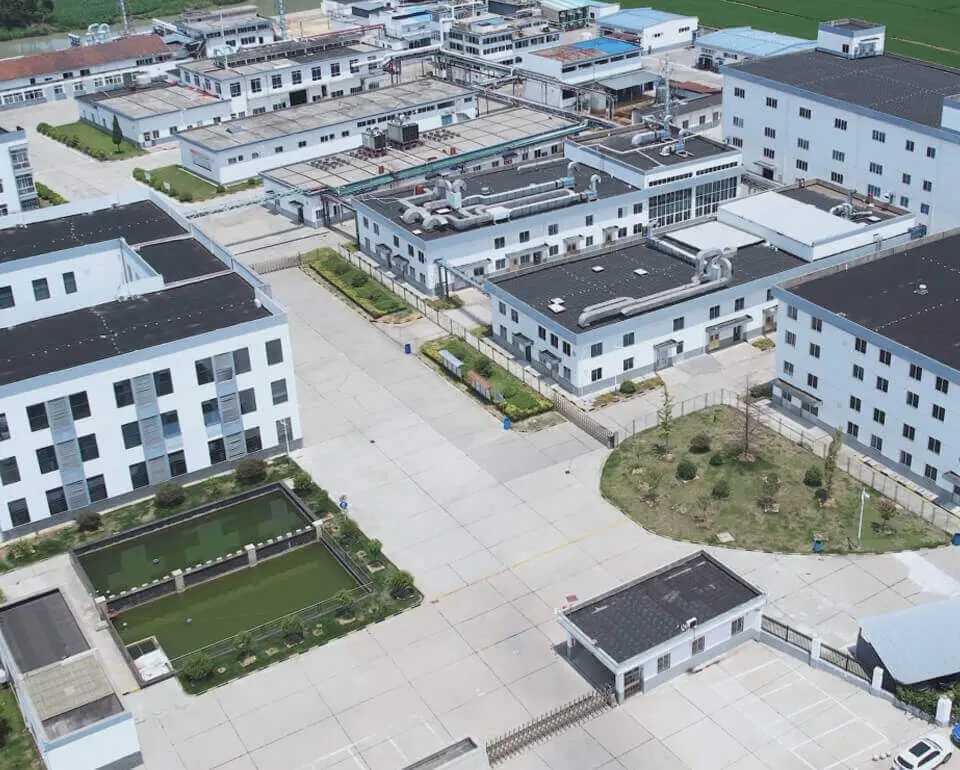
Jiangsu Jingye Pharmaceutical was founded in 1994 and restructured in 2016. The company operates a 50,000-square-meter facility in Changzhou and integrates R&D, production, and international trade.
Its technical capabilities include high-temperature and high-pressure reactions, hydrogenation, chiral synthesis, and high-vacuum distillation. The company states that it operates according to GMP standards and maintains modern production facilities, analytical instruments, and a complete EHS system.
Its products are exported to Europe, America, Southeast Asia, Japan, and South Korea, providing experience with international pharmaceutical supply requirements.
For a Prucalopride intermediate program, these capabilities can support a quality-control strategy extending from raw-material management to process control, purification, analytical testing, batch release, and international delivery.
Final Considerations
Quality control for Prucalopride intermediates should be viewed as a continuous process rather than a final laboratory inspection.
Raw-material consistency influences synthesis. Reaction parameters determine impurity formation. Purification affects both quality and recovery. Drying influences residual solvents and stability. Equipment qualification supports reproducibility. Analytical methods provide evidence, while GMP-oriented documentation and change control protect consistency over time.
When evaluating a Prucalopride intermediates manufacturer China, customers should therefore examine the complete quality chain rather than focusing on a single specification such as assay or price.
Jiangsu Jingye Pharmaceutical combines pharmaceutical R&D, manufacturing, analytical capabilities, specialized synthesis technologies, GMP-oriented operations, and international supply experience. For demanding intermediate sourcing programs, this integrated approach can provide a stronger foundation for predictable quality and long-term supply continuity.