
 English
  Italian
  Spanish
  Thai
Thai  Japanese
  Portuguese
  Korean
  Russian
  French
  German
  Polish
  Arabic
  Indonesian
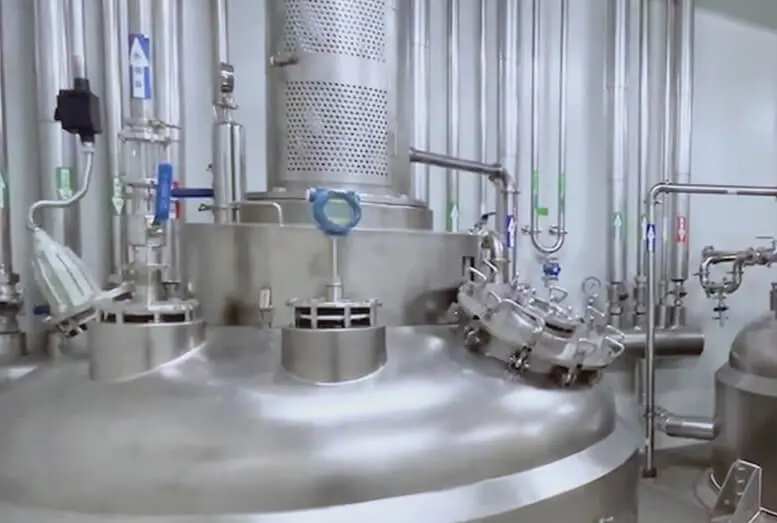
Moving a pharmaceutical intermediate from laboratory synthesis to commercial production is a process-engineering challenge as much as a chemistry challenge. Reaction kinetics, heat transfer, mixing, phase separation, crystallization, filtration, drying, and solvent recovery can all behave differently as batch volume increases.
For companies looking for a Prucalopride intermediates manufacturer China, scale-up capability should therefore be evaluated before commercial orders are placed. The critical question is whether the supplier can preserve the chemical quality established during development while increasing batch size, improving production efficiency, and maintaining GMP-oriented process control.
Why Laboratory Results Cannot Be Directly Scaled
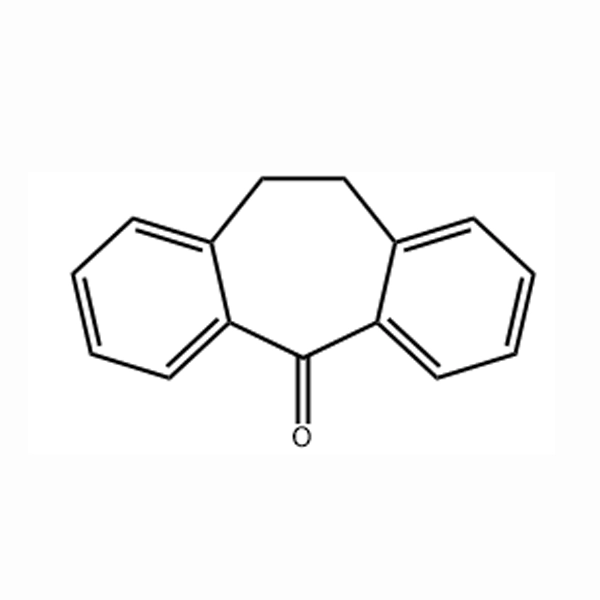
A laboratory reaction may use a 1–5 L reactor where temperature can be adjusted rapidly and mixing is highly efficient. A commercial reactor with hundreds or thousands of liters of working volume has a substantially different surface-area-to-volume ratio and heat-transfer behavior.
This difference can affect exothermic reactions particularly strongly.
For an exothermic reaction, insufficient heat-removal capacity can cause the reaction temperature to rise faster than expected. A temperature excursion can accelerate side reactions, increase impurity formation, or compromise safety.
Scale-up therefore requires more than multiplying reagent quantities. The reaction must be re-evaluated using production-scale equipment, appropriate heat-transfer calculations, controlled addition rates, and validated process parameters.
Reaction Engineering Controls Commercial Yield
Yield is one of the most important economic indicators for pharmaceutical intermediate production, but the highest theoretical yield is not necessarily the best commercial process.
A process yielding 95% but requiring long reaction times, expensive reagents, difficult purification, and large solvent volumes may be less competitive than a 90% yield process with shorter cycle time and simpler separation.
The manufacturing process should be evaluated through overall material efficiency, including starting-material conversion, reaction yield, solvent consumption, catalyst loading, purification recovery, and final isolated yield.
For a high-volume intermediate, improving isolated yield by even 3–5 percentage points can reduce raw-material consumption and increase effective production capacity without adding equivalent reactor volume.
High-Temperature and High-Pressure Reactions Require Robust Infrastructure
Certain pharmaceutical transformations require conditions beyond standard atmospheric-pressure processing.
High-temperature reactions can increase reaction rates but may also accelerate decomposition or unwanted side reactions. High-pressure reactions require appropriate reactor design, instrumentation, pressure protection, and operating procedures.
Jiangsu Jingye Pharmaceutical identifies high-temperature and high-pressure reactions as part of its technical capabilities.
When evaluating such a manufacturer, customers should examine the actual operating range of the production equipment, temperature and pressure control systems, instrumentation, emergency protection, material compatibility, and documented operating procedures.
Technical capability should always be connected to the specific intermediate process rather than treated as a generic manufacturing claim.
Hydrogenation Scale-Up Depends on Mass Transfer
Hydrogenation is particularly sensitive to scale-up because hydrogen must transfer from the gas phase into the liquid reaction medium before the dissolved hydrogen can react.
At larger scale, the mass-transfer coefficient, agitation intensity, gas dispersion, pressure, catalyst concentration, and liquid properties all affect the effective reaction rate.
A laboratory process that reaches completion in 2 hours may require different conditions at production scale if hydrogen transfer becomes the limiting factor.
A controlled scale-up strategy may therefore adjust agitation, pressure, catalyst concentration, temperature, or gas-feed conditions while maintaining the required impurity profile.
The endpoint should be determined analytically rather than solely by reaction time. This helps prevent both incomplete conversion and unnecessary over-processing.
Purification Strategy Influences Cost and Quality
The purification step can represent a significant portion of the manufacturing cost of a pharmaceutical intermediate.
If the reaction generates several structurally similar impurities, simple extraction may not provide sufficient separation. Crystallization, filtration, chromatography, distillation, or combinations of these technologies may be required depending on the chemical properties.
The ideal purification process should achieve the required quality while minimizing product loss.
For example, increasing crystallization recovery from 85% to 92% can significantly increase final output without increasing reactor size. However, recovery improvements must not compromise impurity rejection.
This is why purification development should optimize both purity and recovery rather than focusing on either parameter independently.
High-Vacuum Distillation for Heat-Sensitive Compounds
High-vacuum distillation can be useful when a compound has a high boiling point or may degrade at elevated temperatures.
Reducing absolute pressure lowers the boiling temperature, allowing separation at conditions that may be more compatible with thermally sensitive materials.
The process requires stable vacuum performance and controlled heat input. Pressure fluctuations can change boiling behavior and affect separation efficiency.
Jiangsu Jingye Pharmaceutical's high-vacuum distillation capability can be relevant to intermediate processes where controlled low-pressure purification is required.
For supplier qualification, it is useful to review actual distillation parameters, vacuum capability, equipment scale, temperature-control accuracy, recovery performance, and impurity removal data for the relevant process.
Chiral Synthesis Requires Additional Quality Control
Where an intermediate contains a stereogenic center, stereochemical purity can become a critical quality attribute.
Two compounds with the same molecular formula and connectivity can exhibit different biological behavior when they differ in stereochemical configuration. Consequently, chiral purity may need to be controlled independently from conventional chemical purity.
Chiral HPLC or another validated stereochemical analytical method may be required depending on the intermediate.
Jiangsu Jingye Pharmaceutical lists chiral synthesis among its technical capabilities. For a Prucalopride intermediate, the specific stereochemical requirements should be established in the product specification and supported by appropriate analytical evidence.
GMP Controls the Manufacturing Environment
Scale-up is not only about equipment capacity. It also requires disciplined manufacturing systems.
Raw-material identification, weighing, equipment cleaning, batch records, process instructions, environmental controls, deviation management, change control, and traceability all contribute to reproducible pharmaceutical manufacturing.
Jiangsu Jingye Pharmaceutical states that its operations follow GMP standards and that it maintains a complete EHS system, modern production facilities, and advanced analytical instruments.
The company also reports holding ISO 9001, ISO 14001, GB/T 45001 certifications and a Drug Production License.
For regulated supply chains, these credentials should be reviewed together with product-specific quality documentation and supplier-audit findings rather than treated as substitutes for technical qualification.
Analytical Development Should Support Process Development
Analytical testing is most valuable when it helps explain what is happening inside the process.
During development, analytical methods can identify starting-material depletion, intermediate formation, side-product generation, and final impurity levels. This information allows process engineers and chemists to determine appropriate reaction endpoints and purification conditions.
At commercial scale, the same analytical strategy supports batch release and process monitoring.
A robust control strategy should therefore connect development data with routine manufacturing specifications. When an impurity approaches its established limit, the manufacturer should have sufficient process understanding to identify potential causes rather than relying solely on final-product testing.
Process Validation and Continued Consistency
Once the manufacturing process has been established, validation provides evidence that the process can consistently produce material meeting predetermined specifications.
The number and design of validation batches depend on the applicable quality system and regulatory expectations.
After validation, continued monitoring remains important. Raw-material changes, equipment replacement, process modifications, or changes in operating parameters can affect the intermediate.
A formal change-control system helps ensure that modifications are assessed for their potential effect on product quality before implementation.
International Supply Requires More Than Production Capacity
For international customers, logistics and documentation can influence the reliability of an intermediate supply program.
Packaging must protect the material from moisture, light, temperature variation, or other environmental factors when required by its stability characteristics. Batch identification and traceability should remain intact throughout transportation.
Jiangsu Jingye Pharmaceutical has experience exporting products to Europe, America, Southeast Asia, Japan, and South Korea.
International experience can support communication and documentation requirements, but each product and destination market still requires assessment of applicable regulatory, transportation, labeling, and import requirements.
Why Integrated Manufacturing Capability Matters
An integrated pharmaceutical manufacturer can coordinate R&D, process development, production, analytical testing, quality management, and international trade within one organization.
Jiangsu Jingye Pharmaceutical was founded in 1994 and restructured in 2016, and operates a 50,000-square-meter site in Changzhou with a professional technical team and established production capabilities.
Its cooperation with universities and research institutions also provides an external technical-development network that can support process research and optimization.
For a Prucalopride intermediate program, this integrated model can be particularly useful when the customer needs to move from sample evaluation to larger-scale procurement without changing suppliers during the development process.
Final Considerations
The right Prucalopride intermediates manufacturer China should be able to demonstrate a controlled transition from laboratory chemistry to industrial production.
The critical capabilities include reaction scale-up, heat and mass-transfer control, hydrogenation, high-temperature and high-pressure processing where required, purification, high-vacuum distillation, chiral synthesis, analytical testing, GMP-oriented production, and controlled process changes.
Jiangsu Jingye Pharmaceutical's technical capabilities and established pharmaceutical manufacturing infrastructure provide a basis for supporting complex intermediate production from development through commercial supply.
For customers evaluating suppliers, the strongest evidence is measurable process performance: reproducible assay and impurity profiles, stable yields, controlled batch parameters, validated analytical methods, documented manufacturing procedures, and consistent delivery. A scale-up strategy built around these factors can reduce technical risk while providing a more predictable route to long-term Prucalopride intermediate supply.