
 English
 Italian
 Spanish
 Thai
 Japanese
 Portuguese
 Korean
 Russian
 French
 German
 Polish
 Arabic
 Indonesian

Choosing a reliable 2-Amino-2'-Chloro-5-Nitrobenzophenone intermediate supplier China requires careful evaluation of chemical identity, batch consistency, analytical documentation, and manufacturing capabilities. For pharmaceutical and specialty chemical applications, an intermediate must meet defined quality requirements and remain consistent across repeat orders. Differences in impurity profiles, analytical methods, or storage conditions can create additional verification work and affect the reliability of downstream processing.
Jiangsu Jingye Pharmaceutical, founded in 1994 and restructured in 2016, is an integrated pharmaceutical enterprise engaged in research and development, production, and international trade. Its facilities cover 50,000 square meters in Changzhou, supported by technical capabilities in high-temperature and high-pressure reactions, hydrogenation, chiral synthesis, and high-vacuum distillation. These capabilities provide relevant background for evaluating chemical manufacturing expertise, while the availability and production route of this specific benzophenone intermediate should be confirmed directly with the company.
Confirming Chemical Identity Before Procurement
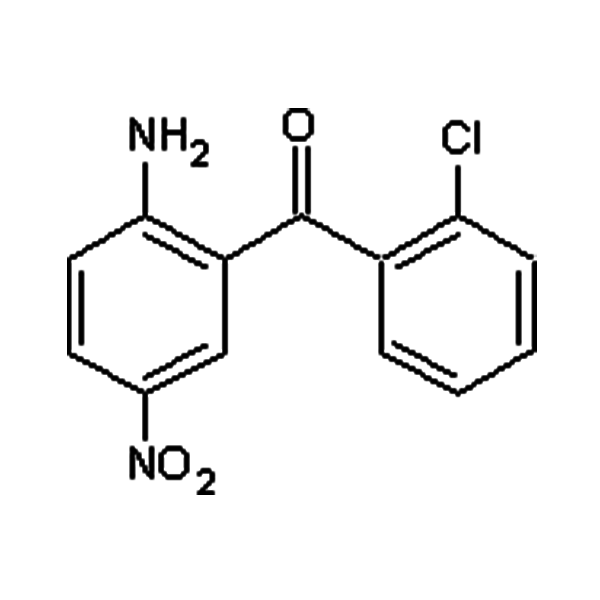
The first requirement when sourcing 2-Amino-2'-Chloro-5-Nitrobenzophenone is to verify that the product matches the intended chemical structure. Aromatic intermediates can have similar names while differing in substituent positions, molecular structures, or impurity characteristics. A naming discrepancy can lead to incorrect material registration, failed incoming inspection, or unsuitable material entering a downstream process.
A technical inquiry should include the full chemical name and, where available, the CAS Registry Number, molecular formula, molecular weight, and structural representation. These identifiers should be checked against an authoritative chemical reference and matched to the supplier's specification and certificate of analysis. The exact identifiers should not be inferred from related benzophenone derivatives.
The specification should also define the intended grade, purity or assay requirement, relevant impurities, and applicable analytical methods. If the intermediate will be used in an established synthesis process, the acceptance criteria should reflect that process's material requirements rather than rely solely on a generic commercial description.
This step establishes a consistent basis for quotations, sample evaluation, order confirmation, and subsequent batch release.
Why Purity Alone Does Not Define Quality
Purity is a useful starting point, but it does not fully describe an intermediate's suitability. Two batches may report similar chromatographic purity while containing different related impurities. Depending on the downstream process, those differences may affect reaction behavior, purification workload, or the consistency of the final product.
For example, a material with a high reported HPLC area percentage may still require additional investigation if an individual impurity is not adequately characterized or if the analytical method does not resolve relevant components. HPLC area percentage is also not automatically equivalent to mass purity or assay. The reporting basis must be clear before specifications from different suppliers can be compared.
A well-defined quality specification should identify the test method, acceptance limit, and reporting basis for each critical attribute. Depending on the compound and application, relevant tests may include identity confirmation, chromatographic purity, specified impurities, appearance, residual solvents, or other justified parameters. Not every test is necessary for every application; the testing plan should be based on material characteristics and process risk.
For repeat procurement, reviewing several batch certificates can reveal whether results remain consistent over time. This provides more useful evidence of supply reliability than a single favorable sample.
Analytical Documentation and Batch Traceability
A certificate of analysis should identify the product and batch, state the tests performed, and report the corresponding results against the agreed specification. The document should make it possible to connect the material received with the analytical data used for release.
Buyers should check whether the reported methods are appropriate for the characteristics being measured. Identity tests, for example, establish different information from impurity testing. A test that confirms the expected compound is present does not necessarily demonstrate that all relevant impurities are controlled.
Where additional assurance is required, customers may request supporting analytical information or arrange independent verification through a qualified laboratory. Such testing can be particularly useful during initial supplier qualification, when the compound is unfamiliar to the receiving organization, or when a downstream process has narrow quality tolerances.
Traceability is equally important when investigating a discrepancy. Product labels, batch numbers, certificates, retained samples, and shipping documents should use consistent identifiers. If a customer's test result differs from the supplier's CoA, both parties should compare sampling procedures, sample handling, analytical methods, reference standards, and calculation conventions before determining the cause.
Manufacturing Capability and Process Consistency
A supplier's manufacturing capabilities should be evaluated in relation to the specific chemistry required. General pharmaceutical manufacturing experience does not automatically demonstrate that a company manufactures every compound in its potential product range.
Jiangsu Jingye Pharmaceutical reports capabilities in high-temperature and high-pressure reactions, hydrogenation, chiral synthesis, and high-vacuum distillation, supported by modern production facilities and analytical instruments. These are relevant capabilities for certain complex chemical processes, but the actual manufacturing route for 2-Amino-2'-Chloro-5-Nitrobenzophenone must be verified separately.
For a specific product, the supplier should clarify whether it is manufactured in-house, produced through a qualified external partner, or sourced for distribution. The organization responsible for production, analytical testing, batch release, and change notification should be clearly identified.
Process consistency also depends on raw-material controls, equipment condition, defined operating procedures, deviation investigation, and appropriate change management. Changes to the manufacturing site, process, starting materials, or analytical methods may affect comparability and should be assessed before implementation where they could influence the agreed specification.
Packaging, Storage, and International Supply
Maintaining chemical quality requires appropriate handling after production as well as during manufacturing. Packaging and storage conditions should be based on the compound's documented stability, handling requirements, and applicable transport classification. Buyers should confirm container suitability, labeling, net quantity, storage instructions, and any relevant precautions.
International deliveries may require a commercial invoice, packing list, safety data sheet, certificate of analysis, and other documents determined by the destination and transport mode. Product names, quantities, batch identifiers, and hazard information should remain consistent across the documentation package.
For recurring orders, buyers should also establish normal lead times, minimum order quantities, sample availability, and procedures for addressing delivery delays or nonconforming material. These details influence the practical reliability of a supplier as much as the initial product quotation.
Jiangsu Jingye Pharmaceutical reports exports to Europe, America, Southeast Asia, Japan, and South Korea, along with a quality and environmental management framework that includes ISO 9001 and ISO 14001 certifications and GB/T 45001. The applicable certification scope and product-specific documentation should be verified during qualification rather than assumed to cover every product or process.
Building a Reliable Supply Relationship
A dependable sourcing arrangement starts with a clear product specification and a transparent understanding of the supplier's capabilities. Before commercial ordering, customers should review the specification, representative CoA, safety data sheet, production or sourcing model, and available traceability information.
For repeat supply, the parties should agree on batch acceptance criteria, change notification, complaint handling, and the documentation required for each delivery. Where product performance is critical, sample qualification and ongoing incoming inspection should be incorporated into the customer's quality procedures.
Conclusion
Selecting a 2-Amino-2'-Chloro-5-Nitrobenzophenone intermediate supplier China requires evidence of product identity, analytical quality, batch consistency, and supply-chain control. Jiangsu Jingye Pharmaceutical's pharmaceutical manufacturing background and technical capabilities provide a basis for further supplier evaluation, but its ability to supply this specific intermediate must be confirmed directly. Clear specifications, verifiable analytical data, and defined change-control arrangements are essential for establishing a dependable long-term supply relationship.