
 English
 Italian
 Spanish
 Thai
 Japanese
 Portuguese
 Korean
 Russian
 French
 German
 Polish
 Arabic
 Indonesian

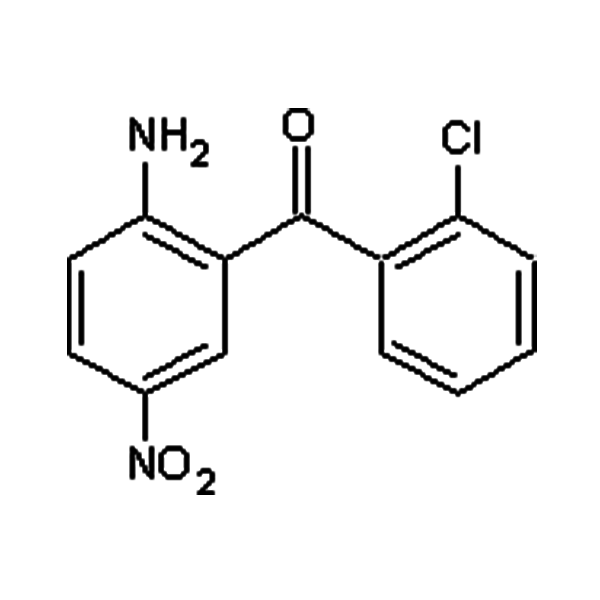
For companies searching for a 2-Amino-2'-Chloro-5-Nitrobenzophenone intermediate supplier China, analytical quality control is a critical part of supplier qualification. A product description and a reported purity value cannot, by themselves, demonstrate that a chemical intermediate meets every requirement of a downstream process. Reliable assessment depends on correct chemical identification, suitable analytical methods, clearly defined impurity limits, and traceable batch-release documentation.
These factors become particularly important when an intermediate is used in multistep synthesis or when a manufacturing process has established limits for incoming materials. A structured analytical approach helps distinguish genuine product differences from variations caused by testing methods, sampling, or reporting conventions.
Establishing a Clear Analytical Specification
Before evaluating a supplier's analytical performance, the required material must be defined precisely. The chemical name 2-Amino-2'-Chloro-5-Nitrobenzophenone identifies a particular substituted benzophenone structure. Its identity should be confirmed using appropriate chemical identifiers and structural information rather than relying on the product name alone.
The product specification should distinguish identity, purity, assay, and other quality attributes. These terms describe different aspects of the material and should not be used interchangeably without a defined analytical basis.
Identity testing establishes whether the material corresponds to the intended compound. Purity testing evaluates the principal component and other detected components under a specified method. Assay measures content according to its defined calculation basis and analytical procedure. A supplier's reported result is meaningful only when the method and reporting convention are understood.
For this reason, buyers should establish the required analytical methods and acceptance criteria before ordering a sample. Where multiple suppliers are being evaluated, using a common specification prevents apparent price or quality differences from arising simply because the suppliers report results differently.
Using HPLC to Assess Purity and Related Impurities
High-performance liquid chromatography (HPLC) is commonly used to assess organic compounds and their related impurities when a suitable method has been developed. For a substituted aromatic intermediate such as 2-Amino-2'-Chloro-5-Nitrobenzophenone, chromatographic separation may help evaluate the principal component and reveal additional detectable components.
However, HPLC results depend on the method conditions, stationary phase, mobile phase, detector, sample preparation, and integration procedure. If relevant components are not adequately separated, the reported result may not accurately represent the impurity profile. Detector response can also differ among compounds, meaning that area percentage should not automatically be interpreted as mass percentage.
When reviewing a supplier's CoA, buyers should establish whether the reported purity is based on chromatographic area normalization, an assay method, or another defined measurement. The analytical method should be appropriate for the intended purpose, and any required individual impurity limits should be specified separately where justified.
A high HPLC area percentage can provide useful evidence, but it is not a substitute for confirming identity, evaluating relevant impurities, or reviewing the suitability of the method. The appropriate level of testing depends on the application and the risks associated with material variability.
Complementary Methods for Identity Confirmation
Different analytical techniques answer different questions. Infrared spectroscopy can provide information about characteristic functional groups, while nuclear magnetic resonance spectroscopy can support structural identification. Mass spectrometry may help confirm molecular mass or investigate selected impurities. Chromatographic methods can provide information about component separation and relative abundance.
These methods are complementary rather than interchangeable. A spectrum consistent with the expected compound does not necessarily establish that the sample meets a strict impurity specification. Similarly, a chromatographic peak with the expected retention behavior is not, by itself, definitive proof of chemical identity.
The analytical package should therefore be designed around the required level of assurance. For initial qualification, a customer may need identity confirmation and a more detailed review of the impurity profile than would be necessary for routine incoming checks after a supplier has demonstrated consistent performance.
The supplier should clarify which tests are performed for every batch, which are available on request, and which require an external laboratory. Any customer-specific testing should be agreed before production or shipment so that expectations are clear.
Understanding Impurity Profiles and Process Risk
Impurities may originate from starting materials, incomplete conversion, side reactions, purification, or changes during storage. Their relevance depends on the manufacturing route and the downstream chemistry. Without verified process information, it is not appropriate to assume a particular impurity pattern for this compound.
For a customer using the intermediate in a multistep process, an impurity may become more significant if it carries through into a subsequent stage, interferes with a reaction, or complicates final purification. This is why a total purity limit may not always be sufficient for process control.
An appropriate specification may include individual impurity limits or additional characterization when supported by process knowledge. The goal is not to maximize the number of tests, but to identify the quality attributes that materially affect suitability.
During initial supplier qualification, reviewing supporting chromatographic data can help establish a baseline. The interpretation should account for peak separation, integration, method limitations, and the distinction between identified and unidentified components. A chromatogram alone cannot prove the identity of every peak.
Once a suitable material profile has been established, subsequent batches can be compared against the agreed specification and relevant historical data. Significant differences should trigger an investigation rather than an automatic assumption that the material is acceptable because its overall purity still passes.
Batch Release and Analytical Traceability
A certificate of analysis should connect a specific batch to the tests performed and the results reported. It should identify the product unambiguously and use consistent batch identifiers across the release and shipping documentation.
Quality review should examine the actual results rather than relying exclusively on pass-or-fail statements. For example, comparing results across several batches may reveal changes in a specified impurity or in another critical attribute even when each batch remains within the formal acceptance limit.
Traceability becomes especially important when the supplier and customer obtain different analytical results. The investigation should consider sampling representativeness, sample storage, preparation procedures, instrument conditions, reference standards, and calculation methods. Where necessary, the parties may agree on confirmatory testing through a qualified independent laboratory.
A documented process for handling out-of-specification results, complaints, and deviations can help ensure that investigations are systematic and that corrective actions are recorded. The responsibilities for reviewing data and authorizing batch release should also be clear when manufacturing and testing are performed by separate organizations.
Manufacturing Controls and Change Management
Analytical quality depends on the consistency of the manufacturing process. Raw-material controls, equipment condition, operating procedures, purification, storage, and packaging can influence the characteristics of the finished intermediate.
Jiangsu Jingye Pharmaceutical was founded in 1994 and restructured in 2016. The company reports an integrated pharmaceutical business covering research and development, production, and international trade, with technical capabilities that include high-temperature and high-pressure reactions, hydrogenation, chiral synthesis, and high-vacuum distillation. These capabilities are relevant background when assessing chemical manufacturing experience, but the specific production route and quality-control arrangements for 2-Amino-2'-Chloro-5-Nitrobenzophenone require product-level confirmation.
A supplier should also explain how changes are evaluated and communicated. Changes to the manufacturing location, starting-material source, production route, or analytical method may affect comparability. Where a change could influence the agreed quality attributes, the customer should receive sufficient information to assess whether additional testing or requalification is required.
Storage and Sample Handling
Analytical results are only useful when the sample has been handled appropriately. Sample containers, storage conditions, labeling, and preparation procedures should be consistent with the material's documented handling requirements. Uncontrolled exposure or contamination can create discrepancies between the material at dispatch and the sample tested by the customer.
The supplier should provide suitable storage guidance based on available product information. Buyers should also confirm the packaging configuration and relevant transport precautions before arranging international delivery.
During initial evaluation, the sample's batch identity should match the accompanying CoA. If a commercial order will be produced from a different batch, the supplier should clarify how the later batch will be tested and released against the approved specification.
Selecting a Qualified Supplier
When comparing a 2-Amino-2'-Chloro-5-Nitrobenzophenone intermediate supplier China, buyers should assess the analytical specification, test methods, batch records, manufacturing or distribution model, and response to quality inquiries together. A low quotation or high stated purity should not replace evidence of product suitability.
Jiangsu Jingye Pharmaceutical reports modern production facilities, advanced analytical instruments, a complete EHS system, and management certifications including ISO 9001, ISO 14001, and GB/T 45001. The scope and current validity of relevant certifications should be confirmed, and the supplier's ability to manufacture or supply this exact compound should be verified before qualification is completed.
Conclusion
Reliable analytical quality control requires a defined specification, appropriate identity and purity testing, meaningful impurity assessment, and traceable batch-release records. For a 2-Amino-2'-Chloro-5-Nitrobenzophenone intermediate supplier China, the most useful evidence is not a single purity figure but a consistent body of product-specific analytical data supported by effective manufacturing and change-control procedures.