
 English
 Italian
 Spanish
 Thai
 Japanese
 Portuguese
 Korean
 Russian
 French
 German
 Polish
 Arabic
 Indonesian

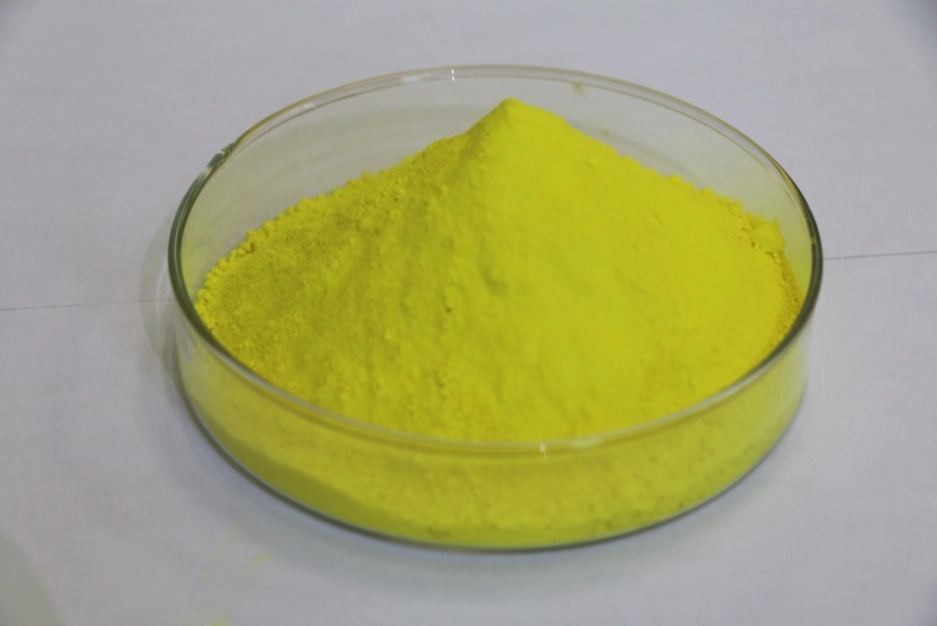
Finding a dependable 2-Amino-2'-Chloro-5-Nitrobenzophenone intermediate supplier China requires a structured assessment of product specifications, manufacturing capability, analytical documentation, and international supply arrangements. For specialty chemical sourcing, a competitive quotation is only one part of the decision. The material must meet the required quality standard, arrive with the correct documentation, and remain consistent when the customer places repeat orders.

A well-defined sourcing process reduces uncertainty by aligning technical and commercial requirements before a purchase order is issued. It also makes quotations from different suppliers easier to compare because each supplier is evaluated against the same product specification and delivery expectations.
Define the Product and Required Grade
The first step is to confirm the exact chemical identity. 2-Amino-2'-Chloro-5-Nitrobenzophenone is a substituted aromatic benzophenone compound, and its precise substitution pattern must match the intended material. Similar chemical names should not be treated as proof of equivalence.
A sourcing inquiry should include the full chemical name and available identifiers, such as the CAS Registry Number, molecular formula, molecular weight, or structural representation. These details should be verified against a reliable chemical reference and the supplier's product documentation.
The inquiry should also define the required grade, purity or assay basis, relevant impurity limits, analytical methods, and any customer-specific quality attributes. If the intermediate will enter an established manufacturing process, the specification should reflect the receiving organization's actual acceptance criteria.
This is particularly important when comparing suppliers. One quotation may describe purity using HPLC area percentage, while another may report assay based on a different method. Unless the measurement basis is aligned, the two values cannot be compared reliably.
A common specification provides the foundation for evaluating price, quality, sample results, and repeat-order consistency.
Verify the Supplier's Actual Product Capability
A supplier's general chemical or pharmaceutical experience does not automatically establish that it manufactures a specific intermediate. Buyers should verify whether the compound is part of the current product portfolio and whether it is manufactured directly, produced by a qualified partner, or supplied through distribution.
This distinction affects production traceability, quality responsibilities, lead times, and change notification. If an external manufacturer is involved, the sourcing organization should clarify who controls the manufacturing process, who performs the analytical testing, and who is responsible for batch release and customer complaints.
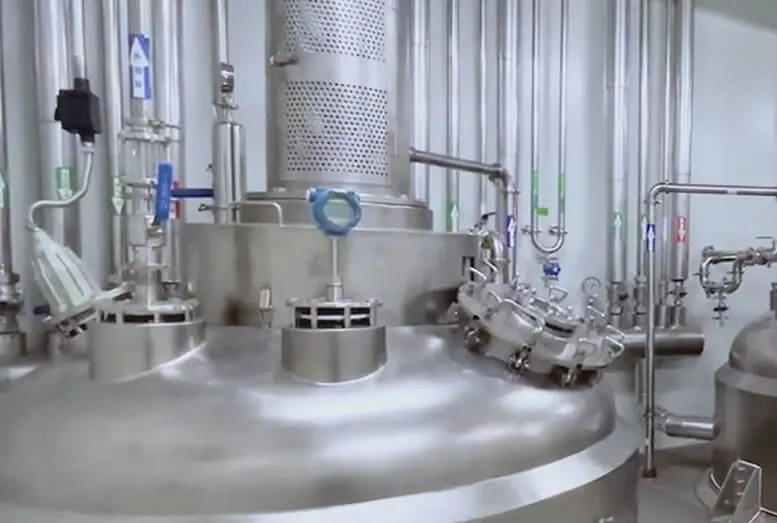
Jiangsu Jingye Pharmaceutical, founded in 1994 and restructured in 2016, describes itself as an integrated pharmaceutical enterprise engaged in research and development, production, and international trade. Its reported technical capabilities include high-temperature and high-pressure reactions, hydrogenation, chiral synthesis, and high-vacuum distillation. These capabilities may be relevant when reviewing its broader chemical manufacturing experience, but they do not independently confirm that the company manufactures 2-Amino-2'-Chloro-5-Nitrobenzophenone.
Before qualification, request product-specific documentation, including the current specification, a representative certificate of analysis, available sample information, and clarification of the manufacturing source. These documents help establish whether the supplier can meet the actual requirement rather than simply respond to the keyword in a sourcing inquiry.
Compare Quotations on a Consistent Basis
The lowest quoted price does not necessarily produce the lowest total procurement cost. Differences in analytical documentation, impurity control, packaging, delivery terms, and batch consistency can create additional costs after the initial purchase.
A meaningful quotation comparison should include the material specification, order quantity, unit price, packaging configuration, production lead time, shipment terms, and documentation provided. Buyers should also confirm whether sample testing, additional analytical work, or special packaging is included or charged separately.
Consider two suppliers offering material with a nominal purity of 98%. Before comparing their prices, the buyer should determine whether both results use the same analytical basis, whether the impurity limits are equivalent, and whether the certificates refer to representative production batches. The same stated percentage does not necessarily mean the products are equivalent in all quality attributes.
The cost of nonconforming material should also be considered. Additional testing, delayed production, rejected deliveries, and repeated supplier qualification can outweigh a small difference in unit price. For recurring requirements, consistent specifications and predictable documentation may therefore be more valuable than a marginally lower initial quotation.
Evaluate Samples Before Committing to Routine Supply
Sample evaluation helps establish whether the material meets the agreed specification before a larger order is placed. The process should begin with an agreed sample quantity, batch identifier, packaging arrangement, and analytical documentation.
The sample should be representative of the material intended for commercial supply. Buyers should confirm whether the sample and future production batches will come from the same manufacturing source and whether the same specification and analytical methods will apply.
Testing should follow the receiving organization's established procedures. Depending on the application, evaluation may include identity confirmation, purity assessment, and checks for specified impurities or other relevant attributes. The required tests should be based on the product specification rather than an arbitrary universal checklist.
If the customer's results differ from the supplier's CoA, the discrepancy should be investigated before acceptance or rejection. Sampling, storage, sample preparation, analytical method, reference standards, and calculation basis can all contribute to differences between results.
Passing a sample evaluation establishes an initial basis for qualification, but it does not guarantee that every subsequent batch will be identical. Ongoing supply should remain subject to agreed specifications, traceability, and suitable incoming controls.
Review Documentation and Compliance Requirements
International chemical sourcing requires consistent product and shipment documentation. Depending on the transaction and destination, the documentation package may include a product specification, certificate of analysis, safety data sheet, commercial invoice, packing list, and applicable transport information.
The product name, batch identifier, quantity, and relevant safety information should be consistent across documents. The customer should also confirm whether additional documentation is required by its quality system, intended use, or local regulations.
A supplier's certifications should be reviewed for current validity, scope, and applicability. Jiangsu Jingye Pharmaceutical reports ISO 9001 and ISO 14001 certifications, GB/T 45001, and a Drug Production License. These credentials provide background on the company's stated management and regulatory framework, but their specific scope should be checked. A certification or license should not be assumed to establish authorization for every chemical product or manufacturing activity.
Buyers should also verify the applicable import, labeling, hazard communication, and transport requirements for the destination country. Requirements can vary according to the chemical's classification, quantity, intended use, and transport method.
Assess Production Lead Time and Supply Continuity
A sourcing decision should account for the time required to allocate or produce the material, complete quality testing, prepare documentation, and dispatch the shipment. A quoted delivery date is more useful when the supplier explains which stages are included and what could cause delays.
For repeat orders, buyers should establish normal lead times, minimum order quantities, forecast communication, and the process for confirming delivery schedules. Where demand is uncertain, sample and small-batch availability may be important during early qualification, while recurring commercial demand may require more structured production planning.
Supply continuity also depends on change management. Buyers should clarify whether changes in manufacturing location, production route, raw-material source, or analytical methods will be communicated in advance when they could affect the agreed specification. If an alternative source is proposed, it should undergo the customer's appropriate qualification process rather than be accepted solely because it uses the same product name.
Establish Clear Quality and Commercial Responsibilities
Before routine purchasing begins, the supplier and customer should agree on how nonconforming material, complaints, analytical discrepancies, and delivery problems will be handled. Responsibilities should be clear when manufacturing, testing, and distribution involve different organizations.
The agreement should identify the applicable specification, required batch documentation, notification requirements, and process for reviewing proposed changes. Where additional tests or customer-specific documents are needed, these should be confirmed before the order is finalized.
Jiangsu Jingye Pharmaceutical reports exports to Europe, America, Southeast Asia, Japan, and South Korea. For a specific international order, buyers should still confirm the destination served, shipment arrangements, required documents, and the supplier's ability to support the requested product and quantity.
Conclusion
Choosing a 2-Amino-2'-Chloro-5-Nitrobenzophenone intermediate supplier China requires a balanced assessment of chemical identity, analytical quality, manufacturing capability, documentation, delivery reliability, and total procurement cost. Standardizing the specification makes supplier quotations comparable, while sample qualification and traceability help establish confidence in repeat supply.
Jiangsu Jingye Pharmaceutical's reported pharmaceutical manufacturing experience and technical infrastructure provide a starting point for supplier assessment. The decisive step is to verify its current capability to supply this specific intermediate and obtain product-level evidence that the material meets the required quality and delivery conditions.