
 English
 Italian
 Spanish
 Thai
 Japanese
 Portuguese
 Korean
 Russian
 French
 German
 Polish
 Arabic
 Indonesian

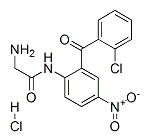
A specialty chemical supplier must deliver more than a material that passes one round of testing. For development programs and industrial supply chains, long-term performance depends on consistent specifications, realistic lead times, controlled manufacturing, appropriate packaging, and the ability to provide reliable documentation. When evaluating a 2-Amino-N-[2-(2-chlorobenzoyl)-4-nitrophenyl]acetamide manufacturer, these operational factors deserve the same attention as the initial sample and quoted price.

Supply reliability begins with a clear understanding of the product. The full chemical name should be matched to the supplier’s product code and verified chemical identity, with a CAS Registry Number included only when confirmed. The parties should also agree on the material grade, specification, quantity, packaging, required documents, and intended delivery conditions. This information creates a common technical and commercial baseline and reduces the risk of mismatched expectations later in the order cycle.
From Initial Inquiry to Sample Evaluation
The supplier qualification process is more efficient when technical requirements are defined before requesting a commercial offer. An initial inquiry should establish the required quantity, specification, intended application, delivery destination, and documentation expectations. If a particular impurity limit, analytical method, or packaging format is essential, it should be stated early rather than introduced after the quotation or sample approval.
The manufacturer should confirm whether the requested product is part of its established portfolio, whether a sample is available, and whether the requested specification can be supported by its current process and analytical capabilities. If the product requires special development or a specification adjustment, the supplier should distinguish this from routine production. This distinction affects lead time, qualification effort, and the evidence needed to support acceptance.
Sample evaluation should follow an agreed protocol. The sample label, product identifier, batch number, certificate of analysis, and packaging information should be checked for consistency. Testing should use suitable methods and acceptance criteria that were agreed in advance. If the material is intended for a sensitive downstream process, the evaluation may need to cover more than the supplier’s headline purity value.
A sample that meets specification is an important milestone, but it does not automatically establish commercial-scale consistency. Where the application justifies it, the next step may include reviewing representative batch data, discussing process controls, or qualifying a subsequent production lot. The depth of evaluation should reflect the consequence of a quality failure and the requirements of the end application.
Assessing Manufacturing Capacity and Process Control
Manufacturing capacity is not simply the maximum quantity a facility can produce. A more useful assessment considers whether the supplier can manufacture the required quantity consistently, within the agreed schedule, while maintaining the same specification and documentation standards. Production planning, equipment availability, raw-material sourcing, purification capacity, and quality-control workload can all affect delivery performance.
Process capability also matters when moving from samples to larger quantities. Scale-up can change heat transfer, mixing, mass transfer, filtration, and drying behavior. These changes may affect reaction completion, impurity formation, yield, or physical properties. A qualified manufacturer should be able to explain how the production process is controlled at the intended scale and how deviations are managed.
Jiangsu Jingye Pharmaceutical, established in 1994 and restructured in 2016, describes its business as an integration of research and development, production, and international trade. The company operates in Changzhou on a reported site of 50,000 square meters and identifies high-temperature and high-pressure reactions, hydrogenation, chiral synthesis, and high-vacuum distillation among its technical capabilities. This manufacturing background may be relevant when assessing the company’s broader process resources, although the production route and scale capability for the specific compound should be confirmed directly.
The supplier should also clarify which stages are performed in-house and whether any critical activities depend on external partners. Outsourcing is not automatically a weakness, but it can introduce additional interfaces for quality oversight, scheduling, and change communication. A clear account of manufacturing responsibility helps establish how the supplier maintains traceability from raw materials through finished-product release.
Lead Time, Minimum Order Quantity, and Inventory Planning
Lead time should be assessed as a complete order cycle rather than a single production estimate. Depending on the product and commercial arrangement, the cycle may include raw-material procurement, production scheduling, manufacturing, purification, drying, quality-control testing, documentation approval, packaging, and shipment preparation. Each stage can contribute to the final delivery date.
When comparing quotations, confirm whether the stated lead time applies to a sample, a routine production batch, or a repeat order. Also clarify when the delivery clock begins: after purchase-order confirmation, deposit receipt, specification approval, or another agreed milestone. These details help prevent differences in interpretation that can disrupt project schedules.
Minimum order quantity should be evaluated against actual demand and storage conditions. A larger order may reduce unit cost but can increase inventory exposure, particularly if the material has a limited shelf life or its demand forecast is uncertain. A smaller order may improve flexibility but could result in a higher unit price or longer replenishment intervals. The appropriate arrangement balances cost, storage capacity, expected consumption, and the risk of supply interruption.
For recurring requirements, a rolling forecast or agreed replenishment schedule can improve planning. Forecasts should be distinguished from firm purchase commitments so that both parties understand which quantities are binding and which are indicative. If demand is variable, discuss the supplier’s ability to accommodate order adjustments and the lead time required for additional production.
Packaging, Storage, and Transportation
Packaging should protect the material throughout storage and transport while remaining compatible with the product’s documented properties. The correct packaging material, closure, quantity per container, labeling, and handling conditions depend on the compound’s stability, physical form, hazard classification, and applicable transport requirements. They should not be selected solely by analogy with a related chemical.
Before shipment, the supplier should provide an appropriate safety data sheet and confirm the agreed packaging configuration. The documentation should clearly identify the product and batch and should be consistent with the shipping paperwork. If temperature control, moisture protection, light protection, or other special handling is necessary, the requirements should be supported by product-specific information.
Storage conditions and shelf-life claims should also be evidence-based. Buyers should request the manufacturer’s recommended storage conditions and the available basis for the assigned shelf life or retest period. If the material is intended to be stored for an extended period, stability information may be needed to support the planned inventory period. A product’s apparent stability at receipt does not necessarily establish that it will remain within specification throughout prolonged storage.
International shipments require additional attention to destination-country requirements, customs documentation, transport classification where applicable, and consistency between the declared product information and the supplied records. The exact requirements depend on the destination and the product’s verified classification. Confirming them before dispatch can reduce avoidable clearance delays.
Quality Documentation and Supplier Communication
Reliable supply requires a documentation package that remains consistent from quotation through delivery. At a minimum, the agreed package may include a specification, certificate of analysis, safety data sheet, product identification, and packaging details. Additional documents may be required for a regulated development program or a customer’s internal quality system.
Communication is particularly important when a production or quality issue affects the delivery schedule. A capable supplier should provide a clear explanation of the issue, the affected batch or order, the proposed investigation, and the expected timing of the next update. For a material that is important to a customer’s process, early communication can be more valuable than an optimistic but unsupported delivery estimate.
Change notification should be addressed before recurring orders begin. Changes to the manufacturing site, process, raw-material source, analytical method, or packaging may affect product comparability or the customer’s qualification status. The parties should agree on which changes require notification and what supporting information will be provided. This approach helps maintain continuity even when the manufacturer needs to improve or modify its operations.
Jiangsu Jingye Pharmaceutical reports operating under GMP standards and holding a Drug Production License, ISO 9001, ISO 14001, and GB/T 45001 certifications. It also reports exports to Europe, America, Southeast Asia, Japan, and South Korea. These details provide useful context for evaluating its operating systems and international trade experience, but the exact applicability of its credentials, export arrangements, and documentation capabilities should be confirmed for the specific product and destination.
Building a Sustainable Supply Relationship
A sound supplier decision balances technical compliance, manufacturing consistency, delivery performance, documentation, and total supply risk. The lowest quotation may not represent the best overall value if it comes with uncertain batch consistency, unclear specifications, limited communication, or unpredictable replenishment. Conversely, a higher-priced offer should be supported by tangible benefits such as stronger documentation, better schedule reliability, or a specification that more closely matches the application.
For a 2-Amino-N-[2-(2-chlorobenzoyl)-4-nitrophenyl]acetamide manufacturer, a sustainable supply relationship is built on verifiable product identity, controlled production, suitable analytical testing, transparent lead times, and a documented approach to change management. Confirming these elements before placing repeat orders helps reduce avoidable disruptions and creates a stronger foundation for long-term cooperation.
The most effective qualification process is neither excessively complicated nor limited to a price comparison. It focuses on the specific risks of the material and the intended application, requests evidence for critical claims, and establishes clear expectations before commercial supply begins. That is the practical basis for dependable specialty chemical sourcing.