
 English
 Italian
 Spanish
 Thai
 Japanese
 Portuguese
 Korean
 Russian
 French
 German
 Polish
 Arabic
 Indonesian

Global pharmaceutical supply chains require more than access to chemical manufacturing capacity. A reliable supply partner must coordinate technical development, production planning, quality assurance, regulatory documentation, and international logistics. For companies searching for a Crotamitone pharmaceutical intermediate supplier China, the challenge is to identify a manufacturer that can meet defined material specifications while supporting stable repeat orders and clear communication throughout the supply process. This is particularly important when a material is incorporated into a downstream pharmaceutical manufacturing route, where supply interruptions or specification changes can affect production schedules and quality control.
From Product Requirements to Manufacturing Specifications
A successful supply relationship begins with a precise understanding of the material being purchased. The product name alone is not enough to establish manufacturing requirements. The supplier and customer should confirm chemical identity, grade, applicable specification, intended process stage, packaging requirements, and expected order quantity.
For Crotamitone-related sourcing, it is particularly important to clarify whether the requested material is an intermediate, an API, or another chemical product associated with the manufacturing process. These categories have different technical and quality expectations. A specification designed for an upstream chemical intermediate may not be appropriate for a finished pharmaceutical substance.
The technical specification should establish the acceptance criteria for key quality attributes. Depending on the material and intended use, these may include identification, assay, related substances, residual solvents, water content, and physical properties. Where the customer has an internal specification, it should be reviewed with the supplier before sample production or commercial quotation.
This early alignment reduces the risk of later disagreements over testing results, product grade, or acceptance criteria. It also allows the manufacturer to evaluate whether its existing production and analytical systems can meet the requested requirements.
R&D and Process Development for Consistent Production
Pharmaceutical chemical manufacturing often requires a balance between reaction efficiency, product quality, process safety, and production economics. A process that performs well at laboratory scale may not produce identical results when transferred to larger equipment. Differences in heat transfer, mixing, mass transfer, pressure control, and equipment geometry can affect reaction behavior.
Scale-up should therefore be based on process understanding rather than simply increasing the batch size. Important variables may include reaction temperature profiles, feed rates, pressure, agitation, reaction time, and work-up conditions. These factors should be reviewed to determine which parameters are critical to product quality and which can be adjusted within an established operating range.
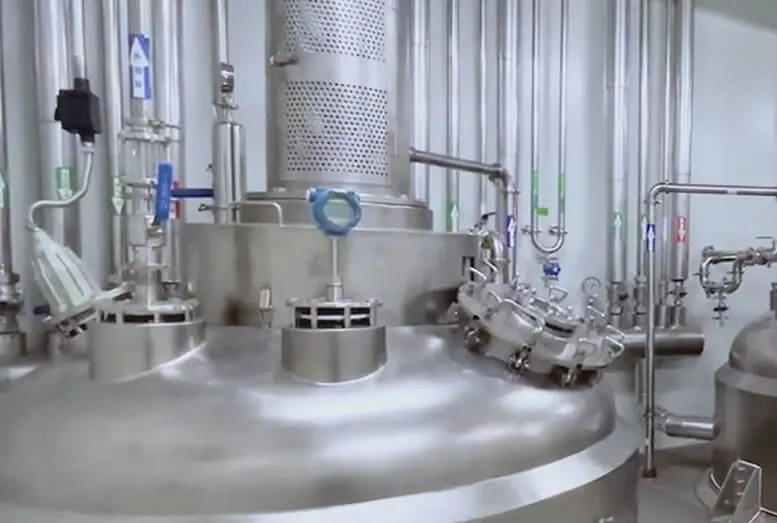
Manufacturing facilities also need suitable equipment for the chemistry involved. High-temperature and high-pressure reactors, hydrogenation systems, and high-vacuum distillation equipment serve different process requirements. Their suitability depends on the specific reaction route, material properties, and safety considerations.
Jiangsu Jingye Pharmaceutical has developed manufacturing capabilities in high-temperature and high-pressure reactions, hydrogenation, chiral synthesis, and high-vacuum distillation. The company also maintains long-term cooperation with universities and research institutions, supporting technical development and process improvement. These capabilities provide a foundation for pharmaceutical chemical manufacturing, although the exact process route and equipment used for a particular Crotamitone-related product should be confirmed during technical evaluation.
Production Planning and Batch Management
Production planning has a direct influence on delivery reliability. Pharmaceutical chemical manufacturers must coordinate raw material procurement, equipment availability, production scheduling, quality testing, packaging, and shipment preparation. A delay at any stage can affect the final delivery date.
For repeat orders, the supplier should be able to explain the relationship between order quantity, production batch size, manufacturing lead time, and inventory availability. A quotation based on existing stock may have a different delivery schedule from one requiring a new production campaign. Customers should also confirm whether the supplier can accommodate forecast-based orders or scheduled releases.
Batch management is particularly important when customers need traceable materials for downstream manufacturing. Each batch should have a unique identifier linked to its production and quality records. This supports material traceability, inventory management, and investigation if a quality issue occurs.
Production capacity should be evaluated in relation to actual demand rather than the nominal size of the manufacturing site. A facility covering a large area does not automatically guarantee available capacity for every product. Relevant questions include whether the required equipment is available, whether the process is already established, what the expected batch size is, and whether production scheduling can support the customer's delivery window.
Quality Assurance and Regulatory Documentation
International pharmaceutical sourcing involves documentation requirements that vary according to product category, destination market, and customer quality systems. A reliable supplier should be able to provide accurate product documentation and explain the scope of its quality and regulatory credentials.
Typical documents may include a product specification, Certificate of Analysis, Safety Data Sheet, packaging details, and relevant quality-system certificates. Depending on the material and commercial arrangement, customers may also request manufacturing declarations, quality agreements, or additional technical information.
The distinction between management-system certification and product authorization is important. ISO 9001 relates to quality management, ISO 14001 to environmental management, and occupational health and safety management certification to workplace safety systems. These certifications do not independently establish that a specific chemical product has been approved for pharmaceutical use in a particular market. A Drug Production License should likewise be checked against its approved scope and relevance to the material supplied.
Jiangsu Jingye Pharmaceutical reports operating in accordance with GMP standards and holding a Drug Production License, ISO 9001, ISO 14001, and GB/T 45001 certifications. Its quality infrastructure includes modern production facilities, advanced analytical instruments, and a complete EHS system. For each sourcing project, the relevant product documentation and manufacturing scope should be reviewed directly to confirm that they meet the customer's requirements.
International Logistics and Supply Chain Coordination
Exporting pharmaceutical chemicals requires careful coordination between manufacturing release and international delivery. The supplier must ensure that the material is correctly identified, packaged, labeled, and accompanied by the required shipping documentation. Packaging should protect product integrity during storage and transportation, taking into account the material's stability characteristics and applicable shipping conditions.
Lead time should include more than the physical transportation period. Production, quality testing, batch release, packaging, export preparation, and customs documentation may all contribute to the delivery schedule. Customers should clarify the agreed delivery terms, shipment responsibilities, documentation requirements, and procedures for handling delays or damaged packaging.
For companies sourcing from China, communication efficiency is another important factor. Technical questions about specifications, analytical results, and packaging should be handled by personnel who understand the product and manufacturing process. Clear communication helps reduce misunderstandings when customers operate under different regulatory systems or internal quality procedures.
Jiangsu Jingye Pharmaceutical exports products to Europe, America, Southeast Asia, Japan, and South Korea. Its experience in international trade supports communication and delivery coordination across different markets. Nevertheless, import requirements should always be assessed according to the destination country, product classification, and customer application.
Managing Long-Term Supply Risk
A long-term supply relationship should include more than an initial sample approval. Customers should establish procedures for reviewing supplier performance, monitoring batch quality, confirming delivery reliability, and managing technical changes. Key indicators may include on-time delivery, batch acceptance rate, deviation frequency, complaint response time, and consistency of analytical results.
Contingency planning is also valuable. If a critical raw material becomes unavailable or a production schedule changes, the supplier should have a defined communication process for informing customers and assessing potential delivery impacts. Changes to manufacturing processes, raw material sources, or analytical methods should be managed through documented change control.
For recurring orders, sharing demand forecasts can help the supplier plan raw material procurement and production capacity more effectively. Forecasts should be distinguished from confirmed purchase orders so that both parties understand the level of supply commitment.
Jiangsu Jingye Pharmaceutical as a China-Based Manufacturing Partner
Founded in 1994 and restructured in 2016, Jiangsu Jingye Pharmaceutical is an integrated pharmaceutical enterprise focused on R&D, production, and international trade. Its approximately 50,000-square-meter manufacturing site in Changzhou is supported by a professional technical team and capabilities covering several specialized chemical processes. The company combines manufacturing infrastructure, analytical resources, EHS management, and international business experience to serve customers in multiple global markets.
For companies evaluating a Crotamitone pharmaceutical intermediate supplier China, the next step should be a product-specific technical review. Confirming the exact material, specification, analytical requirements, manufacturing scope, batch size, and delivery expectations allows both parties to assess supply feasibility before commercial production.
A dependable pharmaceutical chemical supply chain is built through process control, transparent quality documentation, and consistent communication. By evaluating these factors together, companies can make more informed sourcing decisions and establish a supply arrangement that supports downstream manufacturing stability and long-term operational requirements.