
 English
 Italian
 Spanish
 Thai
 Japanese
 Portuguese
 Korean
 Russian
 French
 German
 Polish
 Arabic
 Indonesian

Selecting a Crotamitone pharmaceutical intermediate supplier China is not simply a matter of comparing quotations and lead times. For pharmaceutical manufacturers and chemical sourcing companies, supplier reliability directly affects material consistency, downstream processing, regulatory documentation, and production continuity. Crotamitone is used in topical pharmaceutical formulations, making control over chemical identity, purity, impurities, and batch consistency particularly important. A qualified supplier should therefore demonstrate more than production capacity: it needs a well-controlled manufacturing process, reliable analytical testing, traceable quality records, and the technical ability to respond to changing material requirements.
Understanding Crotamitone and Its Supply Requirements
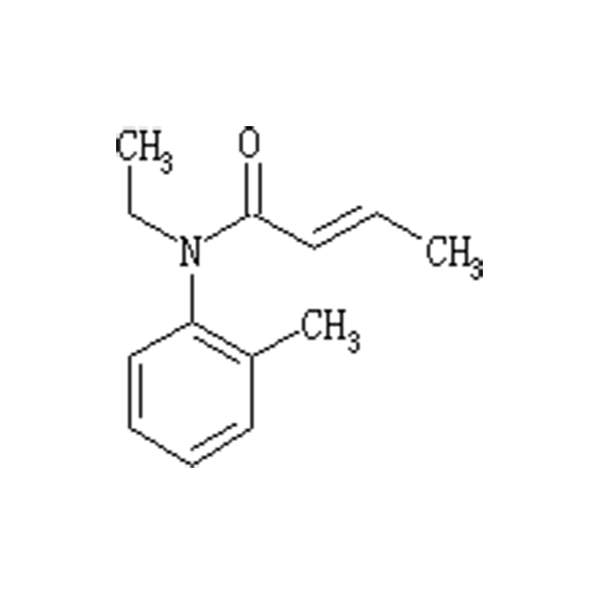
Crotamitone is a pharmaceutical compound associated with topical antipruritic and scabicidal applications. Its chemical identity, purity profile, and physical characteristics must remain consistent with the applicable product specification and intended downstream use. For companies sourcing Crotamitone-related materials, the first step is to clarify the exact commercial and technical requirement.
The term pharmaceutical intermediate can refer to different stages in a manufacturing route. Buyers should distinguish between an upstream intermediate used in subsequent synthesis, a process-stage material, and the finished active pharmaceutical ingredient (API). These categories have different quality requirements, documentation expectations, and regulatory implications. A supplier should clearly identify the material being offered rather than treating all Crotamitone-related products as interchangeable.
Before requesting a quotation, it is useful to establish the required chemical name, CAS number where applicable, molecular specifications, intended application, grade, and applicable quality standard. If the material is intended for further pharmaceutical processing, the downstream process requirements may also influence acceptable impurity limits, residual solvent controls, and material handling conditions.
Why Batch Consistency Matters More Than a Single Purity Result
Purity is one of the most visible indicators in a chemical specification, but it does not independently establish material suitability. Two batches with similar assay results may have different impurity profiles, residual solvent levels, or physical properties. These differences can influence downstream reaction performance, purification efficiency, formulation development, and final product quality.
For pharmaceutical manufacturing, batch-to-batch consistency should be assessed through a combination of analytical results and process records. A Certificate of Analysis (CoA) should identify the tested batch, analytical methods, specification limits, and actual results. Depending on the material and agreed specification, testing may include identification, assay, related substances, residual solvents, water content, and other relevant parameters.
Analytical methods should be appropriate for the material and capable of distinguishing the target compound from relevant impurities. High-performance liquid chromatography (HPLC), for example, may be used for assay and related-substance evaluation when the method is suitably developed and validated or qualified for its intended purpose. Other techniques may be required for identification or specific impurity investigations.
A reliable supplier should also maintain traceability between raw materials, manufacturing records, in-process controls, and finished-batch testing. This makes it possible to investigate deviations and identify whether variations originate from raw material quality, reaction conditions, purification, or storage.
Manufacturing Capabilities Behind a Reliable Supplier
The manufacturing process determines whether a supplier can consistently meet an agreed specification. Pharmaceutical chemical production may involve multiple reaction, separation, purification, and drying stages. Each stage requires suitable equipment, controlled operating conditions, and documented procedures.
Capabilities such as high-temperature and high-pressure reactions, hydrogenation, chiral synthesis, and high-vacuum distillation can be important when a manufacturing portfolio involves complex chemical transformations. However, equipment availability alone does not prove that a specific Crotamitone product is manufactured using a particular process. Buyers should evaluate whether the supplier's actual production route, process controls, and technical experience are suitable for the material being sourced.
Process consistency depends on parameters such as reaction temperature, pressure, reaction time, raw material quality, mixing conditions, and purification efficiency. Changes in these variables may affect conversion, impurity formation, and final product quality. A mature manufacturing system should define critical process parameters, establish appropriate operating ranges, and maintain records that allow each batch to be reviewed.
Jiangsu Jingye Pharmaceutical has operated in the pharmaceutical industry since 1994 and was restructured in 2016. Its manufacturing operations cover approximately 50,000 square meters in Changzhou, China. The company's technical capabilities include high-temperature and high-pressure reactions, hydrogenation, chiral synthesis, and high-vacuum distillation, supported by a professional technical team and cooperation with universities and research institutions.
Documentation and Quality System Evaluation
For international sourcing, documentation is an essential part of supplier qualification. A supplier's quality management system should support material traceability, change control, deviation management, corrective and preventive actions (CAPA), equipment maintenance, and personnel training.
The documentation package should be agreed before commercial supply begins. Depending on the material and customer requirements, it may include a product specification, representative CoA, safety data sheet (SDS), manufacturing or quality declarations, packaging information, and relevant quality-system certificates. Additional documents may be needed for specific markets or regulatory submissions.
It is important to distinguish company-level certifications from product-specific regulatory approval. ISO 9001 indicates a quality management system certification within its stated scope; it does not automatically establish that every product is manufactured under an applicable pharmaceutical GMP authorization. Similarly, a Drug Production License should be reviewed in relation to its approved scope and the actual product category. Buyers should verify the validity, scope, and relevance of all regulatory documents rather than relying solely on certificate names.
Jiangsu Jingye Pharmaceutical reports operating in accordance with GMP standards and holding a Drug Production License, ISO 9001, ISO 14001, and GB/T 45001 certifications. Its modern production facilities, analytical instruments, and EHS management system provide a foundation for controlled manufacturing and quality oversight. Product-specific qualification should still be based on the relevant manufacturing scope and agreed technical documentation.
Evaluating Supply Reliability and International Delivery
A technically qualified supplier must also demonstrate the ability to support consistent commercial supply. Lead time, production scheduling, raw material availability, packaging suitability, and export documentation all influence supply continuity. For materials used in recurring pharmaceutical production, unexpected delivery delays can disrupt manufacturing schedules and increase inventory costs.
Buyers should understand whether quoted lead times refer to existing inventory, scheduled production, or a new manufacturing batch. They should also clarify minimum order quantities, sample availability, batch size, shelf life or retest period where applicable, storage conditions, and packaging specifications. For international shipments, the supplier should be able to coordinate suitable packaging, labeling, transport documentation, and applicable chemical shipping requirements.
A supplier with established international trade experience may be better positioned to handle communication and documentation across different markets. Jiangsu Jingye Pharmaceutical exports products to Europe, North America, Southeast Asia, Japan, and South Korea, giving it experience in serving customers across multiple international markets.
Choosing a Long-Term Crotamitone Supply Partner
The most suitable Crotamitone pharmaceutical intermediate supplier China should be evaluated through a complete combination of product identity, analytical quality, manufacturing capability, documentation, and delivery performance. A low quotation cannot compensate for inconsistent batches or incomplete traceability, particularly when the material enters a controlled pharmaceutical manufacturing process.
Jiangsu Jingye Pharmaceutical combines pharmaceutical R&D, manufacturing, and international trade with established production infrastructure and analytical capabilities. For companies evaluating Crotamitone-related material sourcing, a technical discussion covering the exact product specification, quality documentation, manufacturing scope, and expected order volume is the practical starting point for determining supply suitability.